- Get link
- X
- Other Apps
Interview Proposal with Silicon Valley Girl, Podcast Host and Parent, on micro school and the Future of Education

The rise of AI is forcing a reassessment of what education should look like. In this interview-format article, Silicon Valley Girl — a podcast host, entrepreneur, and parent — walks through what’s breaking in higher education, why the classic four-year path may be losing its monopoly, and how young people (and parents) can build a modern learning roadmap. A recurring idea through this conversation is the concept of a micro school: a focused, deliberately-designed learning pathway that combines short credentials, project work, mentorship, and AI-powered self-study. This piece explores that idea and offers practical steps for anyone aged 17–26 trying to get ahead before AI changes everything.

## Silicon Valley Girl: Table of Contents
- Outline
- Interview
- Practical Roadmap: A micro school blueprint for ages 17–26
- Key Quotes (distilled)
- Final thoughts
- FAQ
Interview Prosal Outline with Silicon Valley Girl
- Why the traditional degree is under pressure
- What education still buys you (and what it doesn’t)
- Voices from builders and founders: real advice for 18-year-olds
- What parents should teach children now
- A step-by-step roadmap for building a micro school and career plan
- Concrete next steps and FAQ
Interview Prosal with Silicon Valley Girl
Why are entry-level jobs disappearing, and what does that mean for traditional degrees?
Entry-level hiring has dropped dramatically — postings in the U.S. are down roughly 35% compared to early 2023, and recent-graduate unemployment has jumped. Companies from startups to enterprise are replacing routine junior work with AI: models that can summarize, draft, analyze code, and automate repetitive processes. When Harvard Business Review and other studies estimate that AI already performs 50–60% of typical junior tasks, the math is stark: paying a human junior for repetitive work is harder to justify.
That doesn't mean degrees will vanish overnight. It does mean the value proposition of a four-year degree is changing. Historically degrees bundled four things: curated knowledge, signaling, network, and the space to develop discipline and mastery. AI is unbundling the first two — knowledge and some short-form signaling — and enabling low-cost alternatives (bootcamps, online credentials, apprenticeships, or well-designed micro school models) to compete for the remaining two: network and deep learning habits.
Is formal education still worth it? When does a degree make sense?
Formal university degrees still make sense in specific, concrete cases:
- When a licensed credential is legally required (medicine, law, certain regulated engineering roles).
- When you can afford the degree without crushing debt and you plan to use campus resources aggressively — labs, research projects, internships, and networks.
- When the university acts as an accelerator: you don’t just attend classes, you collaborate on research, ship products, and surround yourself with peers who push you forward.
What is the real value of education in the age of AI?
The deepest value of education — whether inside a university or in a micro school — is not memorizing slides. It’s the meta-skill of learning to learn: showing up consistently for years, wrestling with hard concepts, finishing difficult projects, and developing the confidence to tackle problems you’ve never seen before. That confidence is something AI cannot fully replicate. A disciplined learning pathway teaches you persistence, how to approach ambiguity, how to debug and iterate, and how to respond when failure is the most likely outcome. This is the rare commodity that powers long-term career growth.

If you were 18 today, what would you do to build useful skills?
Silicon Valley Girl interviewed founders and AI builders to answer that question. The consensus advice: pick a direction and go deep. Not a life-long immutable vocation, but a 10-year direction. Choose a theme — for example: AI + product design, data + storytelling, or software engineering + domain expertise — and commit to sustained practice for at least one to two years.
Why sustained? Mastery takes time. Quick sampling (a couple of months) rarely produces top-notch skill. You need long cycles: build projects, ship, fail, learn, and repeat. That accumulation of deliberate practice is what separates someone an employer can trust from someone who merely has a credential.
What about people who skip college and build their own path — does that actually work?
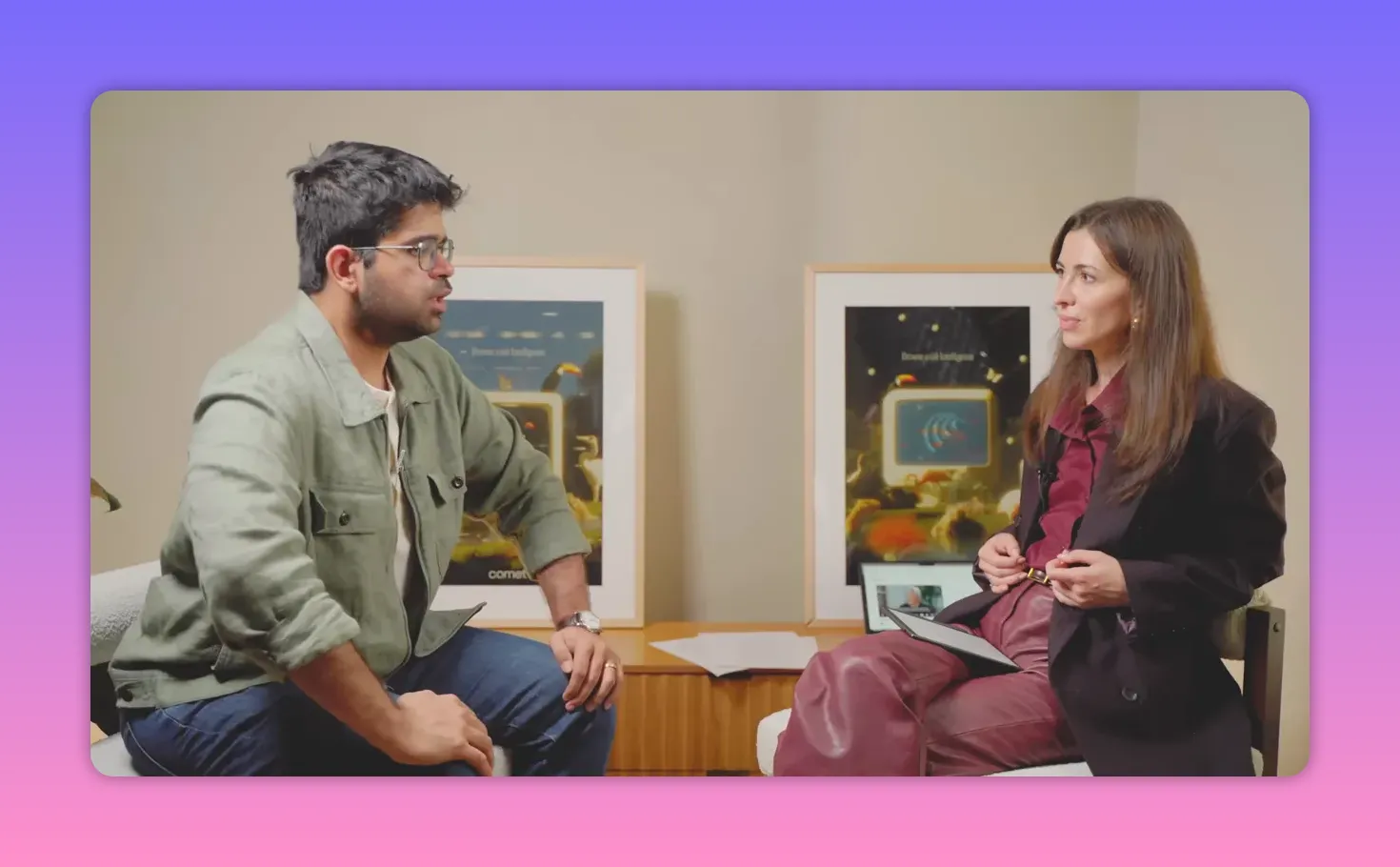
Stories like Samir’s — who decided in middle school that college wasn’t for him and went on to build fast — show alternative pathways can work. But they also show what’s required: a plan, intense focus, and a network. Samir framed his choice around what college offered him (chiefly network) and then deliberately replicated those elements: he found mentors, cold-emailed thoughtfully, hustled for internships, and treated every project as credibility-building work.
Skipping college isn't a shortcut. It replaces one structured environment with another structure you must build yourself: mentors, peers, projects, and signals (portfolio, product launches, references). That's precisely what a thoughtful micro school model does — codify those elements into a compact, goal-aligned learning experience.
How will AI reshape how we actually learn day-to-day?
AI is turning knowledge into a conversation. Instead of static lectures or textbooks, you can have an AI tutor that tailors explanations, quizzes you, and scaffolds learning. Microsoft’s “learn live” style approaches — an on-screen tutor that creates curricula and quizzes for any topic — hint at a future where knowledge acquisition is decentralized and personalized.
That revolution makes it possible to design a micro school that pairs AI-driven tutoring with human mentorship and project-based assessment. The AI handles repetition, scaffolding, and immediate explanations; humans evaluate judgment, nuance, and the messy parts of real-world work.

What should parents and teachers focus on teaching children now?
Across interviews, three skills keep resurfacing:
- Curiosity and observational skill: teach children to notice what could be improved and to ask “why” and “what if.”
- Systems thinking: help them understand how parts interrelate. This is less about learning a specific language and more about modeling cause-and-effect and trade-offs.
- Learning discipline: intentionally introduce friction so children learn how to solve difficult problems without immediate answers handed to them.

What is a micro school and how is it different from a traditional school or bootcamp?
A micro school is a compact, outcomes-driven learning environment that deliberately assembles these elements:
- A short, focused curriculum tied to real-world skills;
- Project-based assessment rather than exams;
- Mentorship and peer cohorts to replicate the network effect of a university;
- AI tutors and tools to accelerate learning and provide individualized practice;
- Portfolio and proof-of-work as the primary credential.
How do you design your own micro school or education roadmap?
Follow a five-step framework that blends the practical advice from founders and AI leaders:
- Pick a 10-year direction.
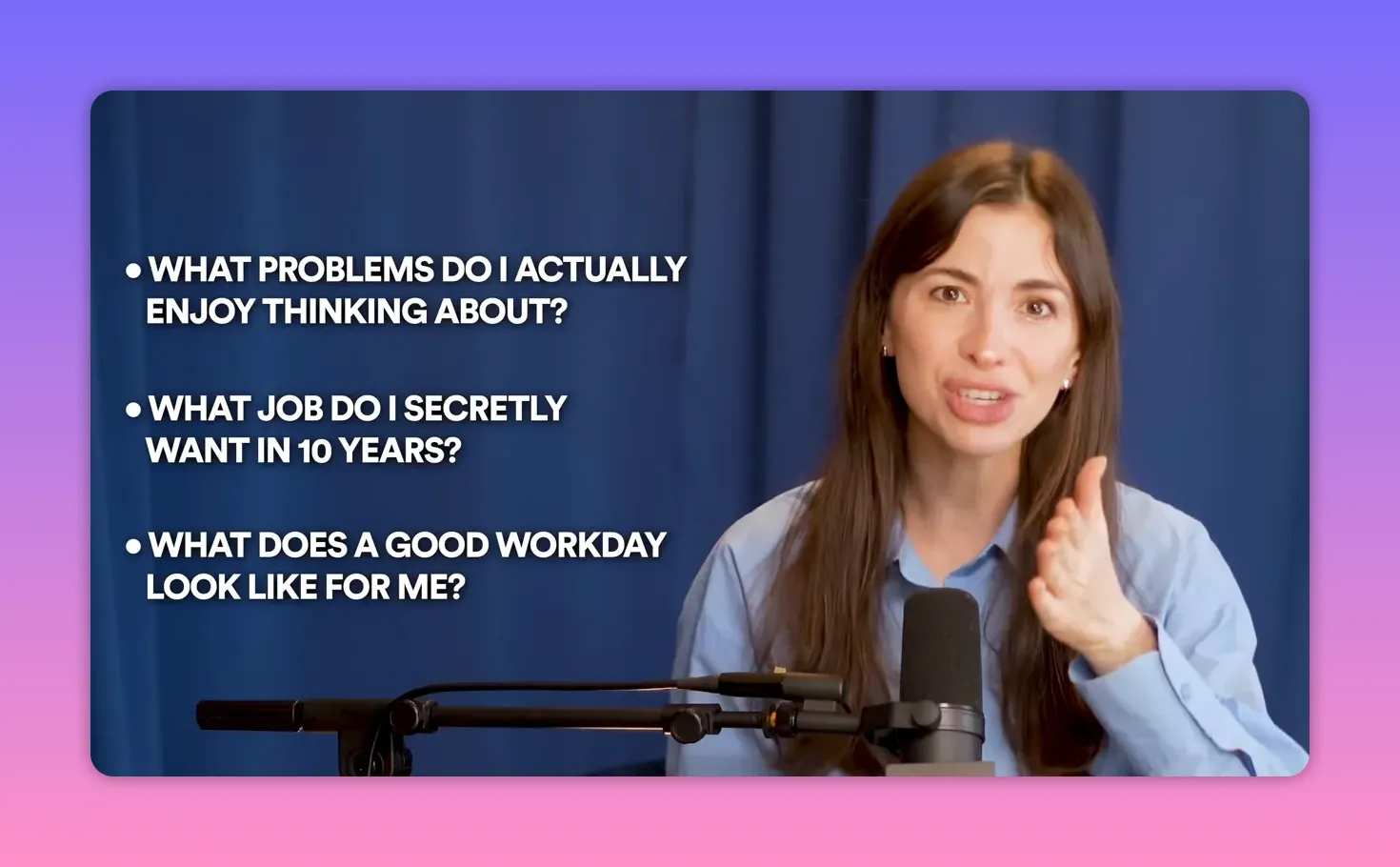
Not a perfect plan — a north star. Answer: what problems do you enjoy thinking about? What would a good workday look like? Write it down. This becomes the anchor for everything you build in your micro school.
- Reverse engineer people already there.
Find people doing the job you want. Study their day-to-day, the tools they use, the projects they ship. That helps you identify the precise combination of skills that matter (e.g., design + AI prompt engineering + product sense).
- Choose the fastest path to build those skills.
Pick a lane based on your constraints:
- Degree — slower, broader, time to experiment.
- Bootcamp — fast, focused, results-oriented.
- Online + self-study — flexible, requires discipline.
- Apprenticeship/internship — paid to learn, high signal.
Ask: what gets me the skills and a visible portfolio fastest for a price I can handle? That’s the micro school design question.
- Build proof of work, not just a CV.
Ship projects that others can evaluate. Code, case studies, content, designs, product demos — anything that proves you can deliver outcomes. Document the process and results. These become the currency of the micro school.
- Use AI every day — as a co-pilot, not a replacement.
AI can explain concepts, quiz you, and review drafts. But keep friction: actively struggle with the hard parts. Let AI accelerate learning loops, not short-circuit practice. In a micro school, AI provides personalized tutoring; humans still assess judgment and craft.
What does success look like for a student in a micro school?
Success is measurable and public. It could be:
- A portfolio of projects demonstrating ability to ship;
- A set of references/mentors who can vouch for you;
- A paid internship, freelance client, or job offer that aligns with your direction;
- An independent product or contribution to open-source used by others.
How should parents prepare financially and mentally for this transition?
Save, but keep options open. A university fund remains a rational hedge if you can afford it — it preserves choice. But also invest in experiences that build the learning-to-learn habit: short courses, apprenticeships, summer projects, or mentoring relationships. The goal for parents is to create optionality: funds that allow kids to choose a micro school, a degree, or to start a business without being trapped by debt.

How do you convince skeptical family members that micro school or bootcamp alternatives are legitimate?
Translate the new currency into old metrics. Show the portfolio, the mentors, the clients, and the measurable outcomes. Don’t argue ideology; demonstrate results. A micro school candidate should be able to present concrete evidence: shipped projects, testimonials, internship or freelance earnings, and a clear plan for the next 1–3 years. That reframes credibility from “college attended” to “work produced.”
What are common mistakes young people make when trying to build their micro school?
Several mistakes recur:
- Sampling too widely without committing. You need depth for credibility.
- Confusing activity for proof. Posting drafts or notes is not the same as shipping.
- Ignoring network. Skill alone is rarely enough; relationships compound opportunities.
- Letting AI do the thinking. Use AI for scaffolding, not for replacing the hard cognitive work that builds judgment.
Which fields will still favor degrees and which will not?
Degrees will remain important in regulated professions (medicine, law, certain engineering specializations) and in research-heavy paths where institutional affiliation and deep theoretical work matter. For many technology roles, product roles, design, and entrepreneurial paths, micro school alternatives, apprenticeships, and short credentials will increasingly compete or even dominate.
How can universities adapt?
Universities that survive and thrive will unbundle credentials, partner with industry to offer modular micro school experiences, and emphasize project-based learning, mentorship, and real outcomes. They will also integrate AI tutors into curricula while protecting the friction that builds character. Think of the modern university as a platform offering optional modules: research labs, capstone micro school cohorts, paid apprenticeships, and portfolio pathways.

Practical Roadmap: A Micro School Blueprint for Young Adults in Silicon Valley
Below is a practical, replicable blueprint to assemble your own micro school or to evaluate micro school programs.
- Define a 10-year north star.
Pick an end-state: the role you want or the type of problems you want to solve. This helps filter experiences and projects.
- Map required skills.
Reverse engineer 3–5 people in your target role. List their tools, projects, and responsibilities. Create a focused curriculum that targets those skills.
- Create a two-year learning sprint.
Design a plan with milestones: 6-month, 12-month, and 24-month outputs. Each milestone must produce a visible artifact: a product, a case study, or a client engagement.
- Combine learning channels.
Use a mix of: short courses (for fundamentals), project work (for application), AI tutors (for practice and explanations), and apprenticeship (for real on-the-job training). This combination embodies the micro school.
- Build a cohort or mentor network.
Find peers and 1–2 mentors. A cohort provides accountability and peer feedback; mentors provide shortcuts via feedback and introductions.
- Measure and publish outcomes.
Log metrics: projects shipped, time to first internship or paying client, letters of recommendation. Publish case studies publicly (a portfolio site, GitHub, or video demos).
- Iterate.
Treat the micro school as a product: solicit feedback from mentors and employers, pivot curriculum, and refine until outcomes align with the north star.
Key Quotes from Silicon Valley Girl
"At 18, you don't need a true calling. You need a direction and you go deep." — Advice distilled from conversations with AI builders.
"Knowledge acquisition is going to be a conversation between you and your co-pilot." — On AI tutors and personalized learning.
"The skills that do not expire are curiosity, systems thinking, and the ability to teach yourself hard things." — The timeless meta-skills a micro school should build.
Concluding Insights from Silicon Valley Girl
We’re at an inflection point. AI is accelerating the commoditization of routine work and democratizing access to knowledge. That means the old “degree-as-default” model is under pressure, but it doesn't mean education is irrelevant. The future favors designed learning experiences — micro school models — that combine focused curriculum, project-based assessment, mentorship, and AI-powered practice. These micro school approaches let ambitious young people get the same benefits universities used to provide (skill, credibility, and network) in shorter, cheaper, and more outcome-focused packages.
Whether you choose a traditional degree, a micro school you build yourself, or a hybrid path, the core task is the same: build proof of work, cultivate mentors, and develop the meta-skill of learning to learn. Do that, and you’ll be prepared to navigate the next decade of rapid change.
FAQs for Silicon Valley Girl
What exactly is a micro school?
A micro school is a compact, outcome-driven learning environment that focuses on skill mastery, project-based assessment, mentorship, and AI-supported tutoring. It replaces the one-size-fits-all four-year program with modular, affordable pathways that prioritize visible proof of work.
Can a micro school replace a college degree?
In many fields, yes — especially in technology, product, design, and entrepreneurship. For regulated professions and research paths, degrees remain necessary. A micro school can replicate many of a college’s benefits (network, projects, mentorship) faster and cheaper when designed deliberately.
How does AI fit into a micro school?
AI acts as a personalized tutor and a productivity co-pilot: it explains concepts in multiple ways, quizzes learners, reviews drafts, and automates repetitive tasks. In a micro school, AI accelerates practice while human mentors evaluate judgment and provide real-world feedback.
What should students aged 17–26 do right now?
Pick a 10-year direction, reverse engineer people in that role, choose the fastest path to the necessary skills (degree, bootcamp, apprenticeship, or self-study), build visible projects, and use AI daily as a co-pilot. Prioritize building proof of work and network.
How can parents support a child interested in a micro school?
Provide optionality: save so the child can choose a degree or alternative path without being forced into debt. Support experiences that build discipline and curiosity — projects, apprenticeships, and mentorships. Resist the urge to eliminate friction that teaches persistence.
Is micro school a trend or the future?
Micro school is emerging as a practical response to structural change in the labor market. As AI democratizes knowledge and employers prioritize proof-of-work, micro school models — whether institutional or DIY — will increasingly become a mainstream route to career readiness.

Want to get started?
Begin by drafting your 10-year direction and listing three people already doing the work you want. Build one small project this month and publish it publicly. Use AI to accelerate learning, but make sure you own and understand the hard parts. That’s the first tangible step toward building your micro school and future-proofing your career.
SEO is LIVE |
|
Check out this really cool SEO websites |
| Do NOT Click me |
This article was created from the video Future of Education: How to Get Ahead before AI Changes Everything with the help of AI.
Comments
Post a Comment