- Get link
- X
- Other Apps
Interview with David Ching, Veteran Architect and Social Housing Advocate — Vietnam Real Estate Scandal, Vietnam Expat
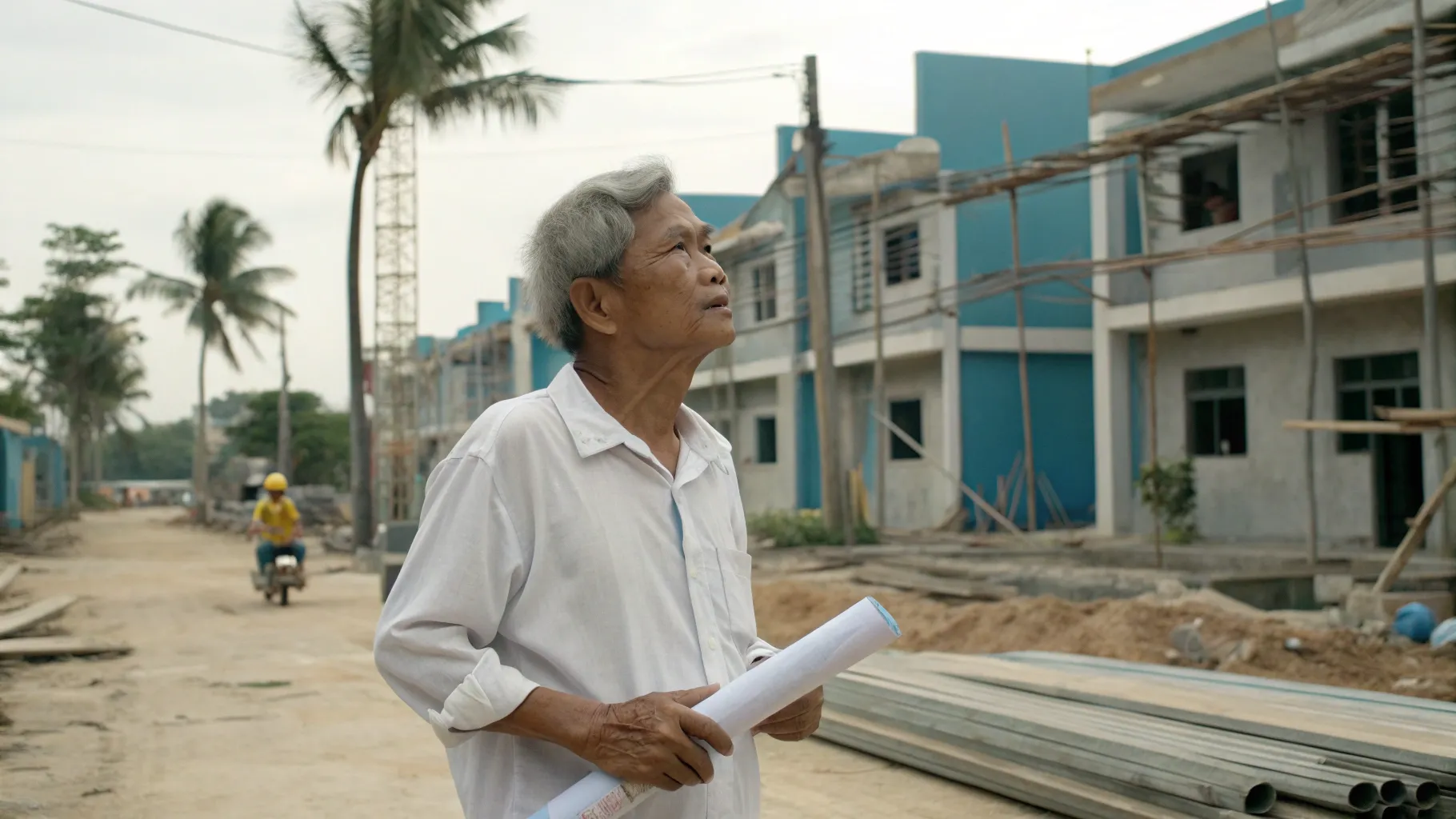
Table of Contents
- Introduction
- About the Interview
- Main Interview (Question & Answer)
- Deeper Analysis: How Fraud, Politics, and Legal Traps Intersect in Vietnam Real Estate
- Practical Checklist for Expats and Investors
- Case Study Recap: Blue House Dang
- Human Cost: Fires, Subdivided Apartments, and the Importance of Social Policy
- Practical Legal Guidance: How to Protect Yourself from "Lock Up" Risks
- Interview Highlights — Short Rapid Fire (Selected)
- Credit and Source
- FAQ — Practical Questions People Ask After Watching "Vietnam Real Estate Scandal, Vietnam Expat"
- Conclusion — Final Thoughts and Action Steps
Introduction
This interview-style article captures a wide-ranging conversation between Attorney Ken Duong (Duong Global Business Consulting Group) and architect David Ching — a Singaporean/Malaysian-born architect who spent more than two decades building, designing, and fighting for social housing in Vietnam. The original video, Vietnam Real Estate Scandal, Vietnam Expat, explores how hard lessons, fraud scandals, and legal landmines shaped David’s work and worldview. It reveals the emotional, legal, and practical realities of investing and operating in Vietnam’s real estate sector: from the Blue House Dang social housing project to partners who were locked up, to the safety lapses that led to tragic deaths.
Below you’ll find the interview presented in Q&A format with expanded context, analysis, practical takeaways for investors and expats, and an FAQ that addresses common follow-ups like Vietnam visa issues, how to repatriate profits, and how to avoid legal traps. This article synthesizes the original transcript and adds background and action steps so you can learn the lessons without living through the costliest mistakes yourself. The post also uses the keywords most relevant to anyone researching Vietnam real estate, including vietnam, ken duong, duong global, vietnam visa, vietnam passport, vietnam citizenship, invest in vietnam, vietnam investment, vietnam economy, vietnam real estate scandal locked up his partners, vietnam real estate, prison in vietnam, lock up in vietnam, vietnam scam, vietnam scandal, vietnam property investment, vietnam legal traps, real estate in vietnam, vietnamese prison stories, social housing, living in vietnam, life in vietnam.
Because the topic is both sensitive and critical for potential investors and expats, this article also highlights concrete legal, cultural, and operational precautions — including registrations, contracts, tax transparency, and local partnerships. The phrase Vietnam Real Estate Scandal, Vietnam Expat appears throughout this article to anchor the subject and provide clarity for readers searching for trustworthy guidance on this fraught topic.
%20-%20visual%20selection.png "vietnam real estate")
About the Interview
Original interviewer: Ken Duong from Duong Global Business Consulting Group. Interviewee: David Ching, architect and former contractor for large-scale social housing projects in Vietnam. The conversation was recorded at Vangan Park in Binh Thanh District, Ho Chi Minh City, and the session covers the years from David’s arrival in Vietnam (2000–2001) to his present work and vision to create jobs and better housing.
Main Interview (Question & Answer)
Q: David, tell us about your first impressions when you arrived in Vietnam around 2000–2001. What did you see and what did you think Vietnam could become?
A: When I first came to Vietnam in 2000, it was reminiscent of Malaysia and Singapore in the 1960s and early 1970s. On the streets I counted motorcycles, bicycles, carts, a few cows — modes of transport that spoke to a developing economy. Cities like Hanoi had very different rhythms compared with Singapore or Kuala Lumpur. Traffic was dominated by motorbikes; private cars were few. The urban fabric, public housing and infrastructure were clearly dated. From an architect’s standpoint, I saw enormous unmet needs in housing, especially public or social housing. I saw the potential for Vietnam to transform over a decade if the right investments and planning were made.
Contextual note: David’s perspective is shaped by his experience in Malaysia and Singapore where public housing programs — especially Singapore’s HDB — provided secure roots for citizens. He believed Vietnam could emulate that success by building modern, affordable housing for its growing urban population.
Q: What made you decide to invest your career and capital into social housing in Vietnam?
A: I was an architect and designer by training, and what I saw in Vietnam was old, decayed public housing with residents lacking basic safety, amenities, and dignity. I gathered partners and formed a company to build social housing and took on the role of main contractor for a major project named Blue House Dang — roughly 1,500 units across three blocks on two-plus hectares. We invested about three million US dollars from our savings to execute the work. The vision was clear: build for people, not for speculative profit.
Important detail: Even though we worked to international standards and prioritized quality, the Vietnamese contracting and developer ecosystem operated differently from Malaysia and Singapore. Consultants and architects were paid at developers’ discretion. Cash flows were delayed, payment disputes were common, and after completion our profits were almost entirely eaten by those operational realities. In many cases we recovered less than 5% of what was due. That experience shaped the rest of my time in Vietnam.
Q: The video title references partners who were “locked up.” Can you explain what happened to your partners and how you personally avoided criminal charges?
A: Some of my partners became embroiled in criminal and political prosecutions. The reasons varied: unethical financial conduct, attempts to maximize profit at the expense of compliance, and entanglement with local political dynamics. How did I avoid the same fate? First, I didn’t fully understand the Vietnamese language, which insulated me from some of the conversations that led to wrongdoing. Second, I kept a narrow focus on execution and quality. Third, I consciously avoided political commentary and public stances. We were here to do a job, not make a political statement.
Lessons to extract: Avoid opacity. While I benefited in part from ignorance of language, the more reliable guardrail is strict records, transparent finances, and insistence on legal counsel that specializes in Vietnam. Do not assume that a local partner’s reputation or a large deal structure absolves you from due diligence. The environment that produced the vietnam real estate scandal locked up his partners built on murky finances and political risk. Operating cleanly, paying taxes, documenting capital flows and contracts are your best defense against lock up in Vietnam.
Q: Many investors fear they can’t take money out of Vietnam. Is repatriation of investment proceeds actually difficult?
A: The common myth is that Vietnam is “Hotel California”: you can bring your money in but you can’t get it out. That’s not strictly true. If you declare funds properly, pay the taxes, maintain transparent accounting, and demonstrate legitimate investments, you can repatriate profits. Show proof of investment, pay the required taxes, and the system will allow capital movement. The risk is when funds are undeclared, or when arrangements are built on hidden or illicit income streams. Those are the setups that lead to vietnam scam and vietnam scandal headlines and, in the worst cases, prison in Vietnam.
Q: When you entered the construction market here, how much did you invest, and what were the immediate operational challenges?
A: We invested over three million US dollars as main contractors in the Blue House Dang social housing project. Immediate challenges included delayed payments, difficult client relationships, and cultural differences in contracting norms. In Vietnam then, developers often dictated terms to consultants and contractors: timing of payment, approval of work, and final release of profit. That made cash flow management and contract enforcement very complex. Additionally, local regulations, hybridized building codes, and inconsistent enforcement made implementation of safety standards challenging.
Q: You mentioned safety lapses and a tragic death at a public park you once managed. How did that incident affect your views on building standards and public housing?
A: The death of an infant due to a safety lapse at a park had a profound effect on me. It underscored how design, planning, and maintenance failures have real human costs. At that park, there were no safety barriers around water edges; accessibility had been prioritized without adequate protective measures for children. This prompted me to push for design that balances accessibility with safety — strong edge protection, clear signage, trained maintenance staff, and community education. Design without an understanding of how people live and use spaces is dangerous. Social housing must include these human-focused safety considerations.
Q: How do Vietnamese architectural standards and building codes compare with international standards? Are they effective?
A: Over the years, Vietnam’s codes have evolved. Initially standards were lax or inconsistently applied. Later, in an attempt to align with international norms, regulators blended standards from Singapore, Europe, and North America — creating a hybrid code that sometimes introduced redundancy. For example, there are multiple layers of fire safety: pressurized escape stairwells, separate safety zones, and fire lobbies. This layering can be costly and, paradoxically, make use confusing for residents. A better path is clarity: apply the right system that fits local context and teach residents how to use it. Training and design simplicity matter as much as technical compliance.
Q: You said you closed the company despite completing work. Why did you close, and what does that say about doing social housing work in Vietnam?
A: We saw the project through to completion, but financial returns were negligible. Because of payment delays, questionable accounting practices by some developers, and a lack of enforceable consultant protections, our firm never realized adequate profit. We eventually closed that particular contracting company. The takeaway: social housing is noble but commercially risky unless structures are built to protect consultants and contractors. Risk allocation, escrow accounts, payment bonds, and strong contractual guarantees are essential. Investors wanting to “invest in Vietnam” for social impact must combine social goals with robust commercial safeguards.
Q: Did corruption and under-the-table payments affect your projects? How did you navigate that?
A: Corruption existed, historically, particularly in immigration and in some parts of administration. I was fortunate that immigration officers are generally more professional today, but during earlier years there were blatant under-the-table demands in certain systems. My personal approach was to remain ethical, document everything, and avoid participating in pay-for-favor schemes. Seek legal counsel early, insist on transparent processes, and, if necessary, exit a deal rather than compromise standards.
Q: On a personal and cultural level, what are the biggest cultural differences you encountered compared to Malaysia, Singapore, or the UK?
A: One striking difference is the centrality of family in Vietnamese life. Family comes first for many Vietnamese workers; the stability of familial support matters more than a paycheck for some. This creates business dynamics different from Malaysia or Singapore. Another observation: in Vietnam, many people study hard after hours — hotel receptionists taking night classes in economics, for instance. There is a hunger for upward mobility. Finally, Vietnamese people often value a second passport or immigration options — many aspire to visas, Vietnam passport alternatives, or citizenship elsewhere for perceived security. Understanding these priorities helps shape HR, retention, and community-focused projects.
Q: You’ve been part of professional groups like PBEC and architectural associations. How have these affiliations helped your work and future plans?
A: Serendipity and networking matter. Coming to Vietnam without connections, I found opportunities through introductions which led to committees and leadership roles. Being honest and maintaining integrity is critical. These groups provide a platform to influence policy, share best practices, and mentor younger professionals. For my future work, they offer credibility and a channel to promote safer, more humane social housing models and to recruit partners aligned with ethical standards.
Q: What practical advice would you give an expat or investor thinking of living in Vietnam or investing in real estate here?
A: Make local friends and integrate — it accelerates learning and reduces cultural mistakes. Register with your foreign embassy or consulate if you feel comfortable, but don’t tie yourself to a single network in a way that limits opportunities. Keep impeccable records: prove funds in, pay taxes, and document contracts. Use escrow accounts or payment guarantees for developments. Insist on transparency and structured governance for joint ventures. If you want to invest in Vietnam property investment or develop social housing, partner with reputable local organizations and use independent legal counsel to avoid vietnam legal traps and potential lock up in Vietnam scenarios.
Q: What are the most overrated and underrated architectural elements in Ho Chi Minh City?
A: Overrated: some landmark towers like Bitexco and others that prioritize image over functionality. Towers designed purely for spectacle — with helicopter pads that will never be used — reflect ego-driven architecture rather than community-oriented urbanism. Underrated: accessible public edges, tree-lined boulevards and beaches that are functionally integrated into city life. Many of Vietnam’s beaches and waterfront areas are underused or inaccessible. There's huge latent value in unlocking public access and human-centered urban design.
Q: You set a legacy goal — 50,000 jobs by age 70. How does that connect to your mission and the lessons of the Vietnam Real Estate Scandal, Vietnam Expat?
A: The legacy is about structural impact: creating sustainable employment and training opportunities so communities can stay and prosper instead of feeling compelled to emigrate. The scandals taught me the cost of not building institutions that protect workers and residents. By creating jobs, vocational training and humane housing, we address both economic and social roots of migration and exploitation. We can build resilience through education, by partnering with institutions like vocational schools, and by scaling businesses that prioritize people. My friend who graduated 50,000 cosmetology students in the U.S. inspired this — transformational impact is possible when you combine training with deployment.
Q: Many foreigners worry about immigration processing and making mistakes at the airport. Is immigration a major hurdle?
A: Immigration processing used to be more corrupt and slow. Today it’s improved, but the queues and first impressions at immigration remain long and bureaucratic. The public perception is that immigration is difficult and sometimes hostile. My advice: prepare documentation carefully, use reputable visa services, schedule arrivals during less busy times if possible, and ensure all corporate and personal tax and registration paperwork is in order before long-term stays. That reduces interaction with ad hoc officials and lowers the risk of administrative disputes that could escalate.
Q: If you could summarize the single most important lesson from your time in Vietnam—especially after witnessing scandal and incarceration of partners—what would it be?
A: Do noble work, stay honest, and build systems that are transparent. Avoid shortcuts. The vietnam real estate scandal locked up his partners because of greed, opacity and political exposure. If you focus on human-centered design, clear contracts, transparent accounting, and compliance, you greatly reduce your exposure to legal and reputational risk. That’s not to say that the system is perfect — it isn’t. But prudence, integrity, and careful legal and financial architecture are the most reliable protections an expat or investor can have.
Deeper Analysis: How Fraud, Politics, and Legal Traps Intersect in Vietnam Real Estate
The transcript and interview reveal a layered reality: real estate deals in Vietnam can be lucrative, but they can also be entangled with political influence and opaque financial arrangements that may result in criminal prosecutions. Below is an analytical breakdown of the key risk areas and pragmatic controls.
Risk Area 1: Opaque capital flows and unofficial fees
Problem: Projects funded with complex cash flows, under-the-table payments or unrecorded transfers invite scrutiny. In some cases, developers or partners diverted funds or masked profits, which resulted in criminal charges.
Control: Use escrow accounts, independent auditors, clear shareholder agreements, and hard evidence of capital injection and tax payments. Maintain copies of every transaction and get independent bank confirmations.
Risk Area 2: Local political entanglement
Problem: Some partners pursued schemes that relied on political favors or local goodwill. If political tides shifted, prosecutions followed.
Control: Avoid political risk by sticking to clearly legal business models, avoiding inducements, and conducting third-party political and legal risk due diligence. Consider structuring deals with non-sensitive, revenue-generating components rather than speculative land deals.
Risk Area 3: Misunderstanding of local regulatory hybrid codes
Problem: Hybridized building codes produced inefficiencies and confusion — sometimes costing more and creating safety blind spots.
Control: Hire local engineers with international experience, insist on simple, teachable safety systems, and include resident education and maintenance plans for safety systems (fire, egress).
Risk Area 4: Contract enforcement and payment discipline
Problem: Developers often controlled consultant payments, and disputes over work acceptance could drag on indefinitely.
Control: Use performance bonds, payment milestones tied to independent inspections, and dispute resolution clauses with international arbitration options where feasible.
Practical Checklist for Expats and Investors
- Do rigorous due diligence: background checks on partners; financial audits; credit and legal searches.
- Insist on escrow or trust accounts for sizable prepayments and milestone payments.
- Keep forensic-level documentation of funds: bank confirmations, SWIFT receipts, and invoices.
- Pay taxes transparently and obtain official receipts; this is crucial for repatriation of profits.
- Structure exits and capital repatriation mechanisms in company bylaws and shareholder agreements.
- Use neutral dispute resolution: include international arbitration clauses, choice of law provisions, and forum-selection clauses where possible.
- Train residents and staff on safety systems to avoid tragedies like illegal apartment subdivisions and preventable fires.
- Engage multilingual legal counsel and translators so you are not insulated by language blindspots.
- Avoid entanglement in local politics; avoid deals that depend on political intervention for approvals.
- Build relationships with reputable local business associations and chambers to access vetted partners.
Case Study Recap: Blue House Dang
Project: Blue House Dang — 1,500 units, three blocks. Role: Main contractor (foreign firm) with about $3 million capital injection.
Outcome: Construction completed according to design and quality standards, but consultant payments were delayed and disputed. Financial recovery was minimal (less than 5% of expected profit). Company closed due to unsustainable cash flow and lack of enforceable contract remedies. The project continues to serve as an example in Vietnam of both the opportunities and the structural risks of social housing development.
Human Cost: Fires, Subdivided Apartments, and the Importance of Social Policy
Beyond financial loss, the interview highlights heartbreaking human consequences: illegal subdivision of apartments (to create micro-rentals) increased fire risk; one of David’s former staff members lost his family in a fire exacerbated by such unsafe conversions. The government’s subsequent move to outlaw illegal subdivisions was necessary but reactive; the sustainable solution is to build affordable housing with proper safety design so that residents are not forced into dangerous configurations.
Practical Legal Guidance: How to Protect Yourself from "Lock Up" Risks
Key legal protections to reduce exposure to vietnam real estate scandal locked up his partners and similar outcomes:
- Contractual clarity: Clear roles, deliverables, timelines, and payment milestones.
- Escrows and bonds: Use third-party escrow services and performance bonds for milestone payments.
- Tax compliance: Register capital injections, declare income and pay appropriate corporate taxes.
- Independent audits: Quarterly audits by reputable international firms reduce exposure to allegations of fraud.
- Corporate governance: Independent boards, strong internal controls, and transparent shareholder voting help guard against partner misconduct.
- International arbitration: Build in neutral arbitration clauses for cross-border disputes.
- Consular registration: Register with your embassy for assistance and to document residency officially.
Interview Highlights — Short Rapid Fire (Selected)
Q: Biggest myth foreigners believe about Vietnam’s business scene?
A: That local businesses are not of international standards. Many Vietnamese are highly capable, and the talent pool is strong.
Q: Craziest unofficial fee you were quoted?
A: 20% — unofficial fees used to be shockingly high in some contexts.
Q: One Vietnamese phrase that saved your skin?
A: David humorously pointed to a phrase that bridged communication, but the deeper lesson: cultural empathy and humility save relationships.
Q: Secret tip for moving to Vietnam?
A: Make friends quickly; integrate locally; don’t isolate yourself within an expatriate bubble.
Credit and Source
This article synthesizes and expands on the original interview published by Duong Global Business Consulting Group (video: Vietnam Real Estate Scandal LOCKED UP his Partners! — YouTube). It is designed to capture the core lessons and provide actionable guidance for investors, expats, and practitioners exploring real estate, social housing, and property investment in Vietnam.
FAQ — Practical Questions People Ask After Watching "Vietnam Real Estate Scandal, Vietnam Expat"
Q: Can foreigners legally invest in Vietnam real estate and repatriate profits?
A: Yes. Foreigners can invest in specific property types and corporate structures in Vietnam under current laws. Key requirements for repatriating profits include documented capital contributions, proof of tax payments, and legally compliant financial statements. Work with local counsel and reputable banks to structure repatriation through documented dividend payouts, loan repayments (if applicable), or sale proceeds with full tax compliance. If you do not document funds properly, you risk disputes and regulatory scrutiny that can block repatriation and create exposure to criminal allegations.
Q: How realistic is the threat of being "locked up" or sent to "prison in Vietnam" as an expat investor?
A: The risk exists where deals involve illicit funds, political corruption, or significant regulatory violations. Many cases result from partner misconduct or poor documentation. You greatly reduce the risk by maintaining transparent financial records, avoiding schemes that depend on bribes, and ensuring tax compliance. If allegations arise, immediate legal counsel that understands Vietnamese criminal and corporate law is essential. The interview and the phrase Vietnam Real Estate Scandal, Vietnam Expat highlight real examples where partners were incarcerated — often for financial crimes tied to opaque deals — but these are not the norm for properly documented, transparent ventures.
Q: Should I register with my embassy or consulate when living in Vietnam?
A: Yes. Registering with your consulate provides a safety net: in emergencies, your government has records of your presence. However, David cautioned not to limit your network solely to consular circles — integrate with local associations, business groups, and community organizations to understand the local market and culture better.
Q: What is the best way to structure a joint venture with Vietnamese partners?
A: Use a clear shareholder agreement with exit mechanisms, specify dispute resolution channels (international arbitration where possible), define payment milestones, leverage escrow accounts, and stipulate independent audits. Include representations and warranties regarding land titles, permits, and financial statements. Appoint neutral independent directors if possible and ensure English and Vietnamese versions of the contract match (with certified translations).
Q: Is social housing still viable as an investment in Vietnam?
A: Social housing has huge social and economic value and can be viable when blended with subsidies, concessional financing, or public-private partnership frameworks. Commercial viability depends on securing reliable payment mechanisms, government support, and designing with maintenance and social services in mind. Because of the policy emphasis on affordable housing in many parts of Asia, there are opportunities — but they require patient capital and careful structuring.
Q: What should an expat do immediately after a partner is arrested or charged?
A: Retain experienced local criminal defense counsel and an international attorney, preserve all corporate and financial records, notify your embassy, and avoid public comments. Document everything, secure corporate accounts when legally permissible, and follow legal counsel. Avoid abrupt moves that might be construed as tampering with evidence.
Q: How can I avoid falling victim to a vietnam scam or vietnam real estate scandal?
A: Protect yourself through rigorous due diligence, insistence on transparent accounting, the use of escrow and independent auditors, independent inspections, legal protections in contracts, and partnerships with reputable, well-vetted local entities. Avoid deals that promise extraordinary returns with little transparency. Know the red flags: insistence on cash, reluctance to sign international arbitration clauses, refusal to use escrow accounts, or pressure to act quickly without documentation.
Q: What role can international arbitration play in protecting foreign investors?
A: Including international arbitration clauses and neutral law choice (e.g., Singapore law or English law) in joint venture and shareholder agreements can deter opportunistic breaches and provide a clear, enforceable route for dispute resolution. However, enforceability of arbitral awards in Vietnam requires legal counsel; awards must be domestically recognized and registered correctly for enforcement.
Q: What are the immediate signs of a risky local partner?
A: Red flags include: inconsistent financial statements, unwillingness to allow independent audits, demands for unofficial fees, opaque company ownership structures, lack of clear permits or title documentation, and pressure to close deals without proper documents. Insist on independent verification and use trusted local contacts or chambers to validate reputations.
Conclusion — Final Thoughts and Action Steps
The Vietnam Real Estate Scandal, Vietnam Expat narrative is a cautionary tale and a call to action. The story of David Ching shows both the promise and the peril of engaging in Vietnam’s property market. On one hand, Vietnam’s growth, energy, and human capital make it an extraordinary place to build meaningful projects. On the other hand, opaque practices, hybridized regulations, and political risk can produce outcomes ranging from financial ruin to criminal prosecution if you ignore the fundamentals.
Action steps:
- Do not shortchange legal and financial due diligence.
- Insist on transparent, documented capital flows and tax compliance for safe repatriation of profits and to avoid being caught in vietnam legal traps.
- Choose partners carefully and structure contracts with escrow, bonds, and neutral arbitration clauses.
- Prioritize human-centered design in social housing to prevent tragedies and avoid the reputational and legal fallout that accompanies them.
- Forge local relationships, register with your consulate, and maintain integrity — it is the best long-term insurance.
David’s legacy ambition — to create 50,000 jobs for Vietnamese people — illustrates the constructive path forward: build responsibly, protect residents, and scale training and employment. For investors and expats who want to invest in Vietnam, the lessons are clear: governance, transparency, and ethical behavior will protect you far more reliably than secrecy or shortcuts.
For those seeking further help, Duong Global Business Consulting Group (Ken Duong) provides support for investors navigating vietnam visa, vietnam passport, vietnam citizenship matters, and complex real estate transactions. The original interview video titled Vietnam Real Estate Scandal LOCKED UP his Partners! is a recommended watch for first-hand context and emotion behind these lessons.
Remember: the phrase Vietnam Real Estate Scandal, Vietnam Expat represents more than a headline — it captures a real risk vector that can be managed with diligence, integrity, and the right legal and financial architecture. Stay informed, stay prudent, and build for people as much as profit.
SEO is LIVE |
|
Check out this really cool SEO websites |
| Do NOT Click me |
Original interview and video: "Vietnam Real Estate Scandal LOCKED UP his Partners!" — Duong Global Business Consulting Group.
Comments
Post a Comment