- Get link
- X
- Other Apps
Interview proposal with Matt Griffith - The Americano, Expat Guide and Digital Nomad Expert: Malaysia or Colombia, Living Abroad, Colombia Expat, Malaysia Expat
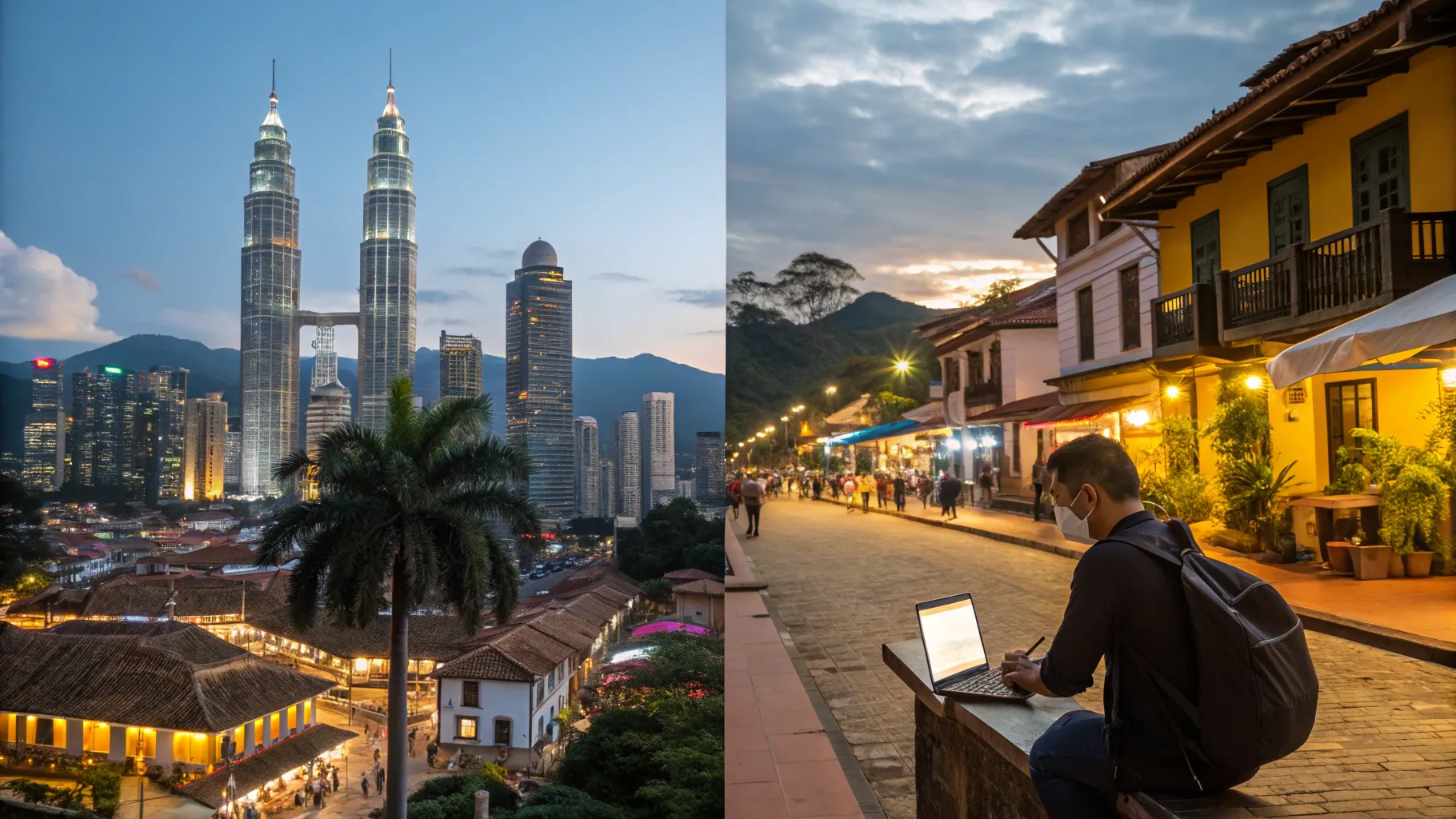
This is an in-depth interview with Matt Griffith — better known online as The Americano — about one of the most common questions he gets: "Malaysia or Colombia, LivingAbroad, ColombiaExpat, MalaysiaExpat?" If you’re thinking about moving abroad, retiring overseas, becoming a digital nomad, or simply exploring where your passive income will stretch furthest, this interview walks through the exact comparisons you need. We cover cost of living, flights, visas, taxes, healthcare, safety, language, culture, nightlife and drinking culture, expat community, and the final verdict. This Q&A-style interview is designed for people who want tactical, no-fluff advice about digital nomad life, expat life, international living and whether to move to Malaysia or Colombia as an expat.
Table of Contents
- About this interview
- Frequently Asked Questions (FAQ)
- Closing thoughts
- Resources for expat content creators
About this interview
In this interview, Matt talks about things you should know if you are from America or anywhere else and want to live in Malaysia or Colombia. He shares what he learned from his own life, talking with expats, and spending time in both places. The title uses words like "Malaysia or Colombia, LivingAbroad, ColombiaExpat, MalaysiaExpat" because people look for these when thinking about moving to another country. We will say this more than once during the interview, along with other words like digital nomad, expat life, retire abroad, earning money without much work, cost to live abroad, travel advice, and moving to another country.

Interviewer: Matt, why are we comparing Malaysia or Colombia, LivingAbroad, ColombiaExpat, MalaysiaExpat in the first place?
Matt: That is a good first question. Many people ask me where they can make their money last, have a good way of life, and not give up on feeling safe, getting healthcare, or being able to travel. Malaysia and Colombia come up a lot for this. They both give you a low cost to live, rich culture, and stable roads and buildings. A lot of people look up "Malaysia or Colombia, LivingAbroad, ColombiaExpat, MalaysiaExpat" to find out which place is better for a person living outside of their home country, in Southeast Asia or Latin America. Both countries give you a different feel of living away from home, chances for people who work online, and ways to stay longer.
Interviewer: Walk us through the first and arguably most important category: cost of living. How do Malaysia and Colombia stack up?
Matt: For many, the cost of living is what people look at first. This is true for those who retire, travel while working, or earn money without a regular job. Cities in Colombia like Medellín and Bogotá give you nice things for less money when you compare them to cities in the US or Europe. A good one-bedroom home can be found for about $400 to $800 per month. The price can change based on where you live and what features you get. When you eat at restaurants, you often pay only $3 to $6 for a meal. Food from stores is also low-cost if you use products grown in the country, but things that come from the West can have a higher price. A small jar of peanut butter from outside Colombia may even cost more than your lunch.
In Malaysia, Kuala Lumpur and Penang are a lot alike when it comes to housing. You can get a one-bedroom place in a good spot for around $400 to $700. Street food stands out here. Full meals from hawker stalls cost between $2 and $4. Foods from the West cost more than in Colombia, but local fruits, veggies, and basics do not cost much at all. Both cities feel about the same for total costs. If you like eating out every day and trying many street foods, Malaysia may feel nicer for you. If you want cheaper rent and cheap food, Colombia is a strong choice.
If you are someone who wants to move to a new country, or you are looking at "Malaysia or Colombia, LivingAbroad, ColombiaExpat, MalaysiaExpat," you will see that both of these places give people real value when you compare them to the US or Europe. They are good for digital workers and people who want to retire in a new place. Both places are helpful if you want to get the most out of money that you do not have to work for all the time. That is why, when you look at the cost of living, these two countries are almost equal.
Interviewer: How about flight times and travel — how important is proximity to your home country?
Matt: It really matters if you want to see family often. A flight from Medellín or Bogotá to Miami takes about three to three and a half hours. A flight to New York takes five to six hours. This is very easy for people in the US. Colombia is almost in the same time zone as most of the US East Coast. If you look at Southeast Asia, this is much better. So, there is less jet lag, lower travel cost, and you spend less time away.
Malaysia, with Kuala Lumpur as its main city, is about 15 to 20 hours away from the US East Coast. You will usually have to take two or more connecting flights. For people from America, this is a big trip. It is not just a quick weekend getaway, so you will want to plan for it. The good thing is that Malaysia is just a short flight from other places in Southeast Asia, like Thailand, Vietnam, Singapore, and Indonesia. This makes it a great base if you want to travel around the region. It is also a good choice if you like to move around Asia on budget airlines.
So, if you live in America and you want to be near the U.S., choose Colombia. If you care about being close to other places in Asia and want a spot in Southeast Asia, pick Malaysia. You can use LivingAbroad, ColombiaExpat, and MalaysiaExpat to help you with your move whether you pick Colombia or Malaysia.
Interviewer: Visas and residency — what are the main pathways for staying long-term in both countries?
Matt: Visas and places to stay long-term are really where things matter for a lot of people. Colombia makes it easier than you might think. It now has a digital nomad visa. This visa is for one to two years for those who earn about $900 each month from work outside of Colombia. People who have retired can look at the M-11 retirement visa. You only need pension money of around $800 per month. If you want to stay as an investor, you can get a visa if you put about $90,000 into real estate in Colombia. The exact numbers and steps do change from time to time. Staying up to date with paperwork will help you handle renewals without much trouble.
Malaysia used to have the MM2H (Malaysia My Second Home) program. It was made for retirees. But now, it’s harder to get. You have to show you have a lot of money that you can use right away. You also need to have money kept in Malaysian banks and prove you get money every month.
Malaysia now has other choices, like the DE Rantau Nomad Pass. It aims at tech workers who make at least $24,000 a year. These rules can change a lot and pretty fast. If you are a digital nomad, the choices in Malaysia need you to have more money and deal with some paperwork.
Colombia wins when it comes to easy and low-cost visas. The income requirements here are not high. There are many clear ways to apply, which helps a lot. This is good for retirees, remote workers, and investors. You do not need a lot of money to start living in Colombia.
If you are searching about "Malaysia or Colombia, LivingAbroad, ColombiaExpat, MalaysiaExpat," you might find that Colombia is a quicker and cheaper way to get legal status. There may be less trouble to deal with too.
Interviewer: Taxes — what should expats and digital nomads know about taxation in Colombia and Malaysia?
Matt: Taxes matter a lot. It’s not only about local tax rates. Each country also handles money made outside its borders in its own way. In Colombia, you become a tax resident if you are in the country for more than 183 days in a year. When you are a tax resident, you have to pay taxes on all your income, not just what you earn in Colombia. But there is some good news. In Colombia, pensions and social security-like payments get special treatment because of old and current tax rules. U.S. citizens living in another country still need to send in their U.S. taxes. They often use the Foreign Earned Income Exclusion (FEIE), and for 2025, this was about $130,000. Even so, taxes around the world can be tough to figure out, and many people get help from accountants in the place where they live.
Malaysia uses a tax system based mostly on where the money comes from, and this can be a big help for expats. Most of the time, you pay tax only on income that you get from work or business inside Malaysia. Money that you get from your pension, social security, or investments from other countries, and business earnings made outside Malaysia, are mostly not taxed. This stays true even if you bring that money into Malaysia. There is some talk in the government about changing the rules, but right now Malaysia is still a good place if you get money from overseas. A lot of people who retire or travel for work, and get money from things like investments, find Malaysia gives them some good tax benefits.
When it comes to taxes, Malaysia comes out ahead in most real-life cases for expats. It has a lower tax load on money brought in from outside the country. It is also easier for people who live off pensions or income that does not come from working every day to settle in.
If you are thinking about "Malaysia or Colombia, LivingAbroad, ColombiaExpat, MalaysiaExpat," taxes might be what helps you pick where to go.
Interviewer: Healthcare — how do Colombia and Malaysia compare for expats who want affordable, quality care?
Matt: Healthcare plays a big role when people think about living in another country. Colombia stands out in this area. A report from the World Health Organization ranked Colombia well years ago, and if you look at past data, you see that the country gets noticed for having strong results and good public choices. Colombia has a public system called EPS; you can join as a resident for about $25 to $30 each month. A lot of expats use public health care and add private insurance to get help faster and wider coverage. Private plans can cost from $60 to $150 monthly, you pay $40 to $60 for a visit to a specialist, and bigger treatments are 60–80% less expensive than they are in the U.S. Cities like Medellín, Bogotá, and Bucaramanga have hospitals and specialists with international approval.
Malaysia is a popular place in Asia for medical tourism. A report from WHO put it lower than Colombia. Still, private hospitals in Malaysia look clean, modern, and people speak English well. Hospitals such as Princecourt and Gleneagles in Kuala Lumpur give top-level care that’s easy to access.
The cost to see a specialist in Malaysia is much less than in the U.S. A visit may cost $30 to $50. Getting an MRI can be $200 to $250. Private health insurance may be $100 to $250 each month depending on your age and what it covers. Malaysia doesn’t have a health system just like Colombia’s EPS. But a lot of expats use the private hospitals because they work well, and many people feel good about the care there.
On paper, Colombia sometimes wins because of public care and very low price. But for many expats who want English help and top private care, Malaysia usually feel like a better choice. If you compare "Malaysia or Colombia, LivingAbroad, ColombiaExpat, MalaysiaExpat," think about if you want public care with low price (Colombia) or shiny private care and easy language (Malaysia). I say this round is even. Both give a lot for what you pay when you look at care in the U.S.
Interviewer: Safety — Colombia’s reputation is evolving. How should prospective expats view safety in Colombia vs Malaysia?
Matt: Safety is what worries people most. A lot of people still think only about Colombia's troubles with drugs in the 1980s and 1990s. Now, though, things in the country have gotten much better. Places like Medellín and Bogotá are busy and full of life. Many expats live there, and there are new places to live and hang out. Small crimes like pickpocketing or stealing bags and phones still happen in places where there are a lot of tourists or crowds. It helps to pay attention and keep watch over your stuff. There is some violent crime, but it doesn’t usually happen everywhere — it's mostly in certain spots or situations. If you live in safe parts of the city, stay away from empty places at night, and use simple steps to be careful, you can feel safe living there.
Malaysia is seen as a safe country in Southeast Asia. Violent crime does not happen often. The rules about guns are strict. Most crimes are about things like theft or scams, not harm. The politics are calm most of the time. Big protests do not often mess up life in most big cities. If you are retired or have a family and want a place where crime is low, Malaysia seems like a good choice.
Malaysia is usually better for safety and the area being steady. But Colombia has made good progress. Many expats say they feel safe and at ease in Colombia once they move to the right neighborhoods and meet local people. If you want to pick based mainly on safety with "Malaysia or Colombia, LivingAbroad, ColombiaExpat, MalaysiaExpat", Malaysia is ahead. Colombia is still a good choice and is getting safer as time goes on.
Interviewer: Language — does English or Spanish make daily life easier for expats in either country?
Matt: Language can be hard or it can help you. It depends on how much you want to learn it. In Colombia, people use Spanish most of the time. Tourist spots and some places where people help you may use English. But in banks, offices, hospitals, and most places every day, people use Spanish.
The good thing is that you learn Spanish fast if you stick with it. A lot of expats like living in Colombia for this reason. They enjoy the chance to practice Spanish and meet new people while being with locals.
Malaysia is a good place for people who speak English. You will find that many use English in the cities, at hospitals, and young people speak it more than others. A lot of signs show English, and the country’s history keeps English common in business and schools. If this is your first time living in another country, or if you want less trouble with learning language, Malaysia is simple to choose. Many like to look at "Malaysia or Colombia, LivingAbroad, ColombiaExpat, MalaysiaExpat," and language is a big reason for their choice. People take Malaysia when they want things to go easy. People take Colombia when they want to learn more language or feel the country’s culture.
Interviewer: Culture and lifestyle — how do the day-to-day vibes compare for expats choosing Malaysia or Colombia?
Matt: The way people live in Colombia and what they value is something that matters to each person. Still, here is a simple way to look at it. Colombia is full of life. People like to talk, make friends, and have fun. There is a lot of music, dancing, street fairs, and cafes. You feel welcome because people are so warm. Cities like Bogotá now have more places to try good food, enjoy craft coffee, and go out at night. Medellín has nice weather all year, people are open and friendly, and many who work online live there. Cities by the coast like Cartagena and Santa Marta are great for their Caribbean feel and beaches.
Malaysia is a country where many cultures come together for food. The food at hawker stalls and night markets brings Malay, Chinese, and Indian styles together. You will see many cultural festivals all through the year. These festivals connect people across backgrounds and belief systems. Life here is more traditional in some ways, as most people are Muslim. This makes the place feel safe and open. The country still welcomes everyone and has people from all over. If you want to try many kinds of food and enjoy a wide range of experiences, Malaysia is a top place to be. A lot of comfort and easy living is found here.
This round is all about what you like. If you want to dance salsa, enjoy coffee, and feel a fun social Latin feel, you will love Colombia. If you want a mix of foods from many places and want to travel around Asia, you will really like Malaysia. For the topic "Malaysia or Colombia, LivingAbroad, ColombiaExpat, MalaysiaExpat," I say it’s even. It just depends on what you want in your daily life and what gets you excited.
Interviewer: A practical — and fun — question: drinking culture. Which country is better for wine, beer, and spirits?
Matt: This is where Colombia often does well. Colombia has a growing craft beer scene. It also has good local lagers like Águila and Club Colombia. You can get wine from South America easily. Rum and aguardiente, a local drink, are a big part of the culture. If you like to try local beers, spirits, and be part of a social drinking culture, Colombia gives you many choices that do not cost much.
Malaysia is not the same as Colombia. This country has more rules on drinks like beer, wine, and spirits because most people there are Muslim. You can still get them in hotels, expat bars, and a few who have special licenses, but there are fewer options. The price is also high because of extra taxes and rules. If you want to have many choices and easy ways to buy drinks, Colombia will feel much more open and cheaper. When you look up "Malaysia or Colombia, LivingAbroad, ColombiaExpat, MalaysiaExpat" and you care about going out at night or enjoying wine, Colombia is most often the better choice.
Interviewer: What about community? How easy is it to find other expats, meetups, and social circles in Colombia vs Malaysia?
Matt: Community means a lot to people. In Colombia, many expat groups can now be found in places like Medellín, Bogotá, and Cartagena. There are Facebook groups, language meet-ups, coworking spaces, and events for digital nomads. But you will see that the number of expats here is lower than in some other well-known expat places. You will often feel part of the local neighborhoods more. This is good if you want a real local feel, but it may mean making friends and settling in takes a bit more time at first.
Malaysia, especially Kuala Lumpur and Penang, has offered a home to expats for many years. Both retirees and people from other countries have been living there for decades. You will see international schools, expat clubs, and regular meetups. There are always many expats around, so people feel welcome right away. If you are looking at "Malaysia or Colombia, LivingAbroad, ColombiaExpat, MalaysiaExpat," Malaysia often comes out on top because it is easy to meet people and join a strong community.
Interviewer: You've walked through each category. Can you summarize the head-to-head results and give a final verdict?
Matt: Sure. In our head-to-head comparison:
- Cost of living: Tie (both places are very affordable)
- Flights and distance: Colombia wins for Americans (closer to the US)
- Visa and residency: Colombia wins (easier, with lower needs to meet)
- Taxes: Malaysia wins (system is good for money you bring in from outside the country)
- Healthcare: Tie (Colombia has a cheaper public system; Malaysia’s private care is better)
- Safety and stability: Malaysia wins (less violent crime, and more steady)
- Language: Malaysia wins (a lot of people speak English)
- Culture and lifestyle: Tie (it depends on what you like)
- Wine, beer, spirits: Colombia wins (it’s easier to get and costs less)
- Expat community: Malaysia wins (a bigger, better network for people moving there)
If you look at those areas, you will see each country is strong in its own way. Colombia is a good choice if you want to be close to the U.S., get easier visas, have fun nightlife, and save on daily expenses. Malaysia is your best pick if taxes matter to you, you want to work with English, feel safe, and want a smooth expat life. What’s the bottom line? It’s all about what matters most to you. Pick Colombia for your budget and to stay near the U.S. Go with Malaysia if you care more about friendly taxes, speaking English easily, and safety.
Interviewer: For someone on a tight budget but who still wants comfort, which should they choose?
Matt: If your budget is the most important thing and you do not need to be near the U.S., then both these countries work well. Colombia has lower rent and cheap places to eat, so it is a bit better if you need simple day-to-day living. But if you must think about taxes from money outside the country, like savings or a pension, Malaysia is good because of their tax rules. Over time, this can help you save more. So, "Malaysia or Colombia, LivingAbroad, ColombiaExpat, MalaysiaExpat" is really about choosing between spending less every month or saving more because of taxes over the years.
Interviewer: What are the most common mistakes people make when moving to Colombia or Malaysia?
Matt: Good question. I see some mistakes that happen again and again:
Not understanding residency rules. Some people think tourists can move in without taking proper steps. You need documents and must follow visa rules on time. Colombia offers digital nomad and retirement visas that are easy to get, yet you need to apply the right way. Malaysia asks for proof of money or income, and this often surprises new people.
Not thinking about taxes. If you come from the U.S. or many other countries, you still have to tell your home country about your taxes. If you don't talk to a tax expert who knows rules in both places, you can run into problems.
Overlooking local customs. Malaysia has many Muslims and some rules about what to wear and how to act in public. Colombia has its own ways of doing things. If you do not learn what is okay or not, you might upset local people.
Sticking to tourist areas only. A lot of people just stay where the tourists go and feel shocked when things cost more or feel different from what they thought. Get out into normal parts of town and check the real prices. You will get a better feel for life there.
Not getting local insurance. Colombia and Malaysia both have insurance options from local companies. International insurance might not cover all you need, so it’s good to buy from both local and worldwide providers. Most people use a mix to make sure they are safe.
Interviewer: For digital nomads specifically, which country is better — Malaysia or Colombia?
Matt: Both countries are good for digital nomads, but in different ways. Colombia is cheaper to live in each day. Medellín has busy places where people work together. It is also simpler to get a visa if you earn a little money from outside the country. The country is a good choice for nomads who want to save money and meet new people, and enjoy the local feel.
Malaysia offers better support for English. It has quicker, more reliable private healthcare. You will find a workplace feel that helps people in tech and startups. The country is in the middle of Southeast Asia, so travel to nearby places is easy. If your remote pay matches the amount you need to enter Malaysia with a visa for work, Malaysia might be the right choice.
For "Malaysia or Colombia, LivingAbroad, ColombiaExpat, MalaysiaExpat," people pick with their own needs in mind. If you care about saving money and the feel of a place, Colombia is often the pick. If speaking English, finding good doctors, and having a spot where others travel often is important to you, you might pick Malaysia.
Interviewer: Any neighborhoods and cities you recommend for new arrivals?
Matt: Sure, here are practical suggestions:
- Colombia:
- Medellín — Poblado and Laureles are popular with expats and nomads for nightlife, coworking, and climate.
- Bogotá — Chapinero and Zona T for restaurants and a cosmopolitan feel; Usaquén offers a quieter, charming life.
- Cartagena — Old Town and Bocagrande for Caribbean life and expat communities.
- Malaysia:
- Kuala Lumpur — Bukit Bintang, Bangsar, and Mont Kiara are expat-friendly with modern amenities and international schools.
- Penang — George Town for food and culture; Tanjung Tokong for seaside living and a growing expat scene.
- Islands — Langkawi offers relaxed island living but with quieter infrastructure.
Interviewer: What practical checklist would you give someone preparing to move to Colombia or Malaysia?
Matt: Here’s a quick checklist you can use to start planning. A lot of these things are part of my free expat checklist from The Passport newsletter. Here is a simple list for both countries:
- Start early to look into visa choices. Collect all papers you need like apostilles, bank statements, and proof that you have money coming in.
- Check what taxes you must pay in your home country and the other country you will go to. Talk to a tax advisor who knows both places.
- Get health insurance that works for both countries. Think about using local or worldwide plans.
- Make sure you have enough money saved. You will need money for your first deposit and three months’ living costs.
- Book two or three weeks’ stay in the new city. You need time to visit areas before you sign any long leases.
- Learn some language basics. For Colombia, practice some Spanish. For Malaysia, practice some Malay (English works well in Malaysia, too).
- Sort out your phone and banking needs before you go. Find a bank account that works internationally and also check local bank choices.
- Join online expat groups before you travel. You can get help with finding a home and making friends.
- Learn about laws on things like drinking, driving, and how to act in public in your new city.
- Find out about health services. Know where clinics and hospitals are, and how to reach doctors who can speak English.
Interviewer: Can you talk about housing and negotiating rent in both countries?
Matt: In Colombia, there are many well-furnished apartments that do not cost a lot. Most of the time, the landlord will ask you for one month as a deposit. They also want one month paid ahead before you move in. Contracts are not all the same. You will see cheaper rent if you look outside the best areas, but the cost of utilities and condo fees can get higher. A good way to look for safe places is to check local Facebook housing groups. You can also ask property managers and people at coworking spaces.
In Malaysia, renting a place can feel different. The person you rent from might want two or three months’ deposit. They might ask for several months’ rent upfront for a short-term lease. A lot of condos in cities come with furniture. Sometimes, you may need a local person to vouch for you. It helps to use good property websites or agents. Wherever you are, make sure you go and see the apartment. Check listings to be sure they are real, and talk about the price. People who rent for a long time often get better deals.
Interviewer: Banking, cash, and digital payments — what's practical advice?
Matt: Cash culture is different between the two. In Colombia, cash remains common in markets and smaller shops; however, cards are increasingly accepted in cities. Withdrawals from ATMs can incur fees, so get a banking strategy: an ATM-friendly card, local account, and an international backup bank.
Malaysia is highly card-friendly; e-wallets are extremely popular (GrabPay, Touch 'n Go eWallet). Local banks are modern and many have English-language support. Opening a local bank account might require residency documentation, but non-resident options exist in some banks. For both countries, maintain a combination of low-fee global bank accounts and local banking solutions for convenience and cost savings.
Interviewer: What about family and schooling — if someone has kids, which is more suitable?
Matt: If you have kids, Malaysia can be a better choice. It has more international schools, and most classes use English. A lot of things for people from other countries feel easy there. In Kuala Lumpur, you will find many international schools that use American, British, and International Baccalaureate programs. Healthcare is good and places feel safe too. These make Malaysia a nice place for families.
Colombia also has international schools in big cities like Bogotá and Medellín. But you do not get many choices outside the capital and other large centers. Some families that want their children to learn Spanish and be part of the culture may find Colombia a good fit. If you want schools that feel more like home and more smooth entry for your kids, then Malaysia is more steady.
Interviewer: Any final, actionable advice for someone leaning toward either country?
Matt: Yes. You should think about what matters most to you. Take a short trip to each place and see how you feel. If you are an American and want to be close to family or like Latin culture, go to Colombia first. If you want good tax options for money from other countries, and you want a place where people speak English and things work well for people from other places, go to Malaysia first.
Plan to stay at least one month in each country before you make any money or law choices. Get the right visa as early as you can. Talk with local accountants. Speak to tax pros who know rules in more than one country. Join websites for expat groups before you show up. These groups help you find places to live fast. They also give true, useful advice that you can’t read in most blogs.
Frequently Asked Questions (FAQ)
Q: Which country is better for retirees: Malaysia or Colombia?
A: It depends. If you want low visa income rules and need costs to be very cheap, Colombia is a good pick. Malaysia often wins for tax rules that help pensions from outside the country and has an easy expat life with English talked by many. Think about what you want in health care, the weather, and how close you want to be to family when you choose.
Q: Is it hard to get healthcare as an expat in Colombia or Malaysia?
A: No, but the way things work is not the same. In Colombia, the public EPS does not cost a lot and many people in the country use it. A lot of expats use it with private insurance too. In Malaysia, private hospitals are new and staff talk to you in English. If you want private care, Malaysia is a good choice. You should get local insurance that fits your budget and needs.
Q: As a U.S. citizen, will I still need to file taxes if I live in Colombia or Malaysia?
A: Yes. U.S. citizens need to file a U.S. tax return no matter where they live. The Foreign Earned Income Exclusion (FEIE) and foreign tax credits can help stop people from paying taxes twice. It is important to know local rules. In Colombia, you get taxed on money from any country if you are a tax resident. A tax resident is someone who stays 183 days or more. In Malaysia, you pay tax only on money you get from inside Malaysia.
Q: Can I live comfortably in Colombia or Malaysia on a $2,000 per month budget?
A: Yes. If you have $2,000 each month, you can live well in either place. That money is enough for a nice home, eating out often, health care bills, trips, and saving some. The way you live will change based on the city, part of town, and the way you choose to spend.
Q: Are there safety concerns for solo female travelers in either country?
A: Both countries have safe areas and people feel good about the places they live. You should always use good safety steps. In Malaysia, violent crime rates be lower. In Colombia, pick your area with care. Do not go to places alone at night and use ride-hailing apps when you need to. Talk to local expat groups to get up-to-date safety tips and find out which neighborhoods are good to stay in.
Q: Which country is more friendly to digital nomads with limited income?
A: Colombia often gives out visas more easily. The cost of living is low. This is good for people who want to work online and do not have a lot of money. Malaysia has new visa choices for people who work in tech jobs online. These are for people who make more money. You will need to meet harder money rules in Malaysia.
Q: What are some must-know cultural differences before moving to Malaysia or Colombia?
Malaysia has rules based on Islam, so people should dress modestly in some places. You need to respect the way the locals practice their religion. Watch how you act in public, especially during their religious holidays. In Colombia, people are friendly. They talk straight and care about their community. It helps a lot if you learn Spanish and understand how people live there. In both countries, you should respect what local people do and try to learn about their lives. This makes things better for you.
Q: Can I bring my pet to either country?
A: Both of these countries let you bring pets. But there are different rules for vaccinations, papers, and what to show at the border. Malaysia wants you to have some health papers, a rabies shot, and an import permit. Colombia has its own rules. You will need a rabies shot and a note from a vet. Make sure you read the latest advice from the embassy and look at airline rules for pets before you go.
Q: How do I choose between Malaysia and Colombia if I prioritize food and nightlife?
A: Food in Malaysia stands out because the country has many types of food from different backgrounds. There are a lot of street food choices for you to try. When it comes to nightlife and drinking, Colombia is more lively. Bars and clubs are busy, and it is much easier to find places to drink. So, you can decide what is better for you based on if you like to try many different foods or if you like night life more. This can help you choose between "Malaysia or Colombia, LivingAbroad, ColombiaExpat, MalaysiaExpat."
Q: Where can I find more resources and help planning the move?
A: You can follow local expat groups on Facebook. You may also join Meetup events in the cities you want to go to. A good idea is to search for coworking spaces too. For help that is just for you, it can be smart to talk to cross-border tax advisors or immigration lawyers. Matt’s The Passport newsletter and The Americano channel are good to use. They have easy-to-follow checklist items and group meetups for people who plan to move. These resources are a good place to start if you are thinking about moving to "Malaysia or Colombia, LivingAbroad, ColombiaExpat, MalaysiaExpat."

Closing thoughts
Choosing between Malaysia or Colombia, LivingAbroad, ColombiaExpat, and MalaysiaExpat is a decision that comes down to what you want. You may pick based on things like being close to family, how much visas cost, taxes, language, healthcare, safety, drinking, and what kind of expat group you are looking for. Both countries have a lot to give to digital nomads, people thinking about retirement, and anyone who wants to live outside their country.
Colombia is close to the U.S. It also has easier ways to get residency and is full of life with fun culture. Malaysia has good tax perks. You will find better English spoken there. It also gives you strong private healthcare. Plus, there is a solid expat setup in place.
If you want to move to another country, you should visit first, try out different areas, and spend time with others who have moved there. Be sure to think about what you need to do for the laws and taxes ahead of time. It does not matter if you pick Malaysia or Colombia. Living abroad gives you the chance to find new things, save money, and make your life feel right for you. You should look into not only the cost to live there, but also how easy it will be to stay, what you will owe in taxes, and how life will feel in the long run.
Thank you to Matt Griffith — The Americano — for talking about what he went through and what helped him. For people who look up "Malaysia or Colombia, LivingAbroad, ColombiaExpat, MalaysiaExpat," this talk gives a clear look at the ups and downs, as well as the good things people care about most.
Resources for expat content creators
If you plan to document your move, build an audience, or monetize an expat blog or YouTube channel, learning how to use video ads can accelerate growth and reach new readers or viewers.
Understanding basic SEO and thoughtful website design will help your expat guides rank for searches like "Malaysia or Colombia" and attract long-term traffic.
Short, shareable clips can go viral when they tap the right emotions—a useful skill if you want to showcase local food scenes, nightlife, or neighborhood tours.
If you publish video interviews (for example, with other expats or local experts), learn how to translate videos to reach multilingual audiences across Latin America and Southeast Asia.
For big-picture planning, brush up on digital marketing trends and consider a short assessment to discover your travelling personality so your content matches the audience most likely to engage with your expat stories.
SEO is LIVE |
|
Check out this really cool SEO websites |
| Do NOT Click me |
Comments
Post a Comment