- Get link
- X
- Other Apps
Interview with SEO Consultant, Digital Nomad & Expat — Thailand or Vietnam: Where’s BEST for Retirees, Expats & Digital Nomads in 2025?
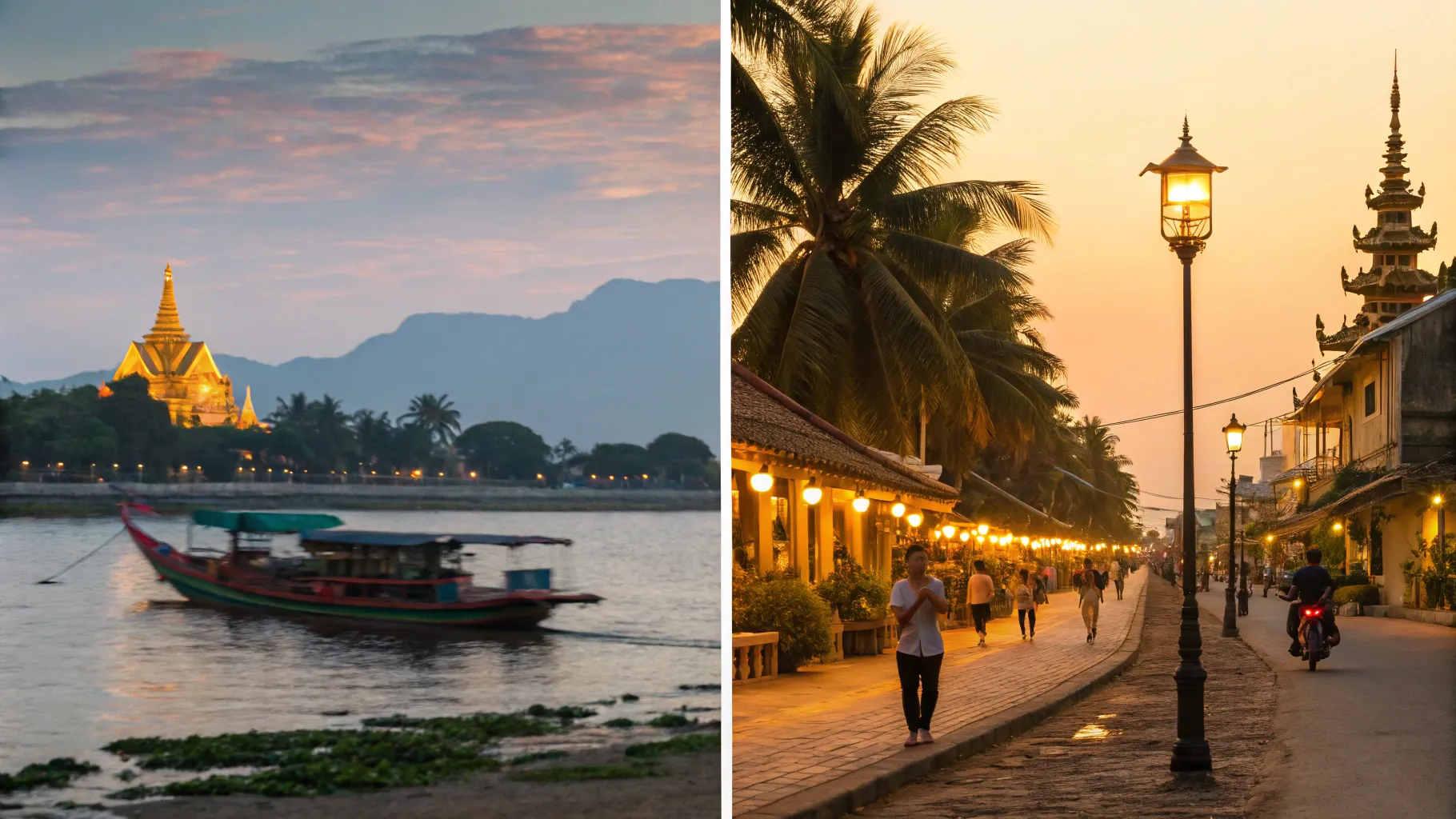
Start by telling us who you are and how long you’ve been living in Southeast Asia — and why we’re talking about "Thailand or Vietnam" today?
I’m Evan. I’ve been working and living around Asia for many years — time in Canada, Japan, Thailand and most recently spending extended periods in Vietnam, especially Da Nang. I work remotely, make videos, and love talking to people who want to move abroad. The "Thailand or Vietnam" question is one I get asked constantly because both countries are obvious choices for retirees, expats and digital nomads. They’re affordable, accessible and vibrant — yet they feel different on the ground. This interview is a practical, boots-on-the-ground comparison designed to help you decide which place might fit your lifestyle in 2025.
What’s the short version of the difference between living in Thailand or Vietnam — especially places like Jomtien, Chiang Mai and Da Nang?
Short version: Thailand and Vietnam both offer extremely affordable living and great quality of life, but the vibe, community and infrastructure vary by city and region. Chiang Mai in Thailand is a co-working and digital nomad hub with lots of infrastructure for remote work. Jomtien (near Pattaya) and other Thai beach towns are more tourism-driven and have stronger nightlife/drinking cultures, while Bangkok is a huge metropolitan hub with many expat pockets. Da Nang, Vietnam — where I’ve spent a lot of time recently — feels more community- and work-focused, with active meetups, co-working spread along the beach, and a younger cohort of expats and remote professionals. In short: both Thailand or Vietnam can be cheap or expensive depending on choices; the choice often comes down to the kind of community you want and the logistics you need.
How should someone approach the "Thailand or Vietnam" decision? Is there a recommended process?
The first step is always a scouting trip. No blog post, YouTube video or forum replaces boots on the ground. Come for at least a week; walk neighborhoods, talk to people, try co-working spaces and local coffee shops, check out costs, and observe the community vibe. The scouting trip is the single best investment you can make when choosing between Thailand or Vietnam because every town and neighborhood is different and your own lifestyle needs (family, work, health, budget) matter more than broad country-level claims.
Let’s get into the practicalities. Tell us about your current routine and costs — where you stay, what you pay, what you eat, and how easy it is to work.
I’m staying in Da Nang in a serviced apartment called Sea Breeze. It’s about 10 million VND per month for a roughly 50 square meter unit — roughly $400 USD a month — and that includes a weekly cleaning and on-site laundry. I can walk to coffee shops and restaurants. A reliable cup of coffee at a decent local place can be as low as 25,000 VND (about $1 US), while nicer specialty cafes might charge 60,000 VND or more.
Workwise, Da Nang is great. There are multiple co-working spaces across the beach, and coffee shops are friendly to laptops. The meetups and remote work community are very active — daily meetups, dinners and social after-parties organized by a local expat. That community makes remote work and networking very easy. By contrast, in many Thai beach towns (e.g., Jomtien) the infrastructure for remote work tends to be less pronounced unless you head to Chiang Mai or other big digital nomad hubs.
How does Da Nang compare to Chiang Mai specifically in terms of remote worker infrastructure?
Chiang Mai has long been a global digital nomad hub — structured co-working spaces, numerous long-term rentals, visa options for remote work, and a critical mass of people doing the same thing. The hard work of creating that infrastructure is done, so you can step off the plane and plug in. Da Nang has been catching up: it’s smaller, but co-working spaces and cafes are popping up along the beach and the meetups are more social-and-work focused. So while Chiang Mai feels like the easier immediate setup for long-term remote work, Da Nang has a more dynamic mix these days with the added benefit of a beach lifestyle.
What’s the expat social scene like in Da Nang compared to Thailand? Are people mostly tourists, retirees, families, or remote workers?
Da Nang’s expat scene is more focused on work, culture and community. People meet up for coffee, co-working, culture discussions and practical advice. The crowd is largely younger professionals and remote workers, but there are families and retirees, too. There’s a lot of turnover — people come, stay a while, then move on — which means new faces and refreshing energy at meetups. In many Thai beach towns, the expat scene has historically been heavier on nightlife and drinking culture (a lot of socializing over beers and bars). That isn’t universally true, but it’s been noticeable. In Thailand or Vietnam, you’ll find pockets that suit you: party scenes, quiet family neighborhoods, or remote-work friendly communities.
How does cost of living compare between Thailand or Vietnam — and between cities like Da Nang, Chiang Mai, Bangkok and coastal Thai towns?
Daily living costs in both Thailand or Vietnam are very low compared to North America or Europe, but there are differences. In Da Nang the day-to-day cost is shockingly low: street food, local transportation, coffee and snacks can be far cheaper than equivalent costs on Thai beaches or Bangkok. However, property prices in Da Nang can be surprisingly high: a small condo can start around $90,000–$100,000 USD in newly built projects. In Thailand, property tends to be cheaper (depending on location), and condos in many Thai cities can be found for less — though desirable beach or city areas will have higher prices too.
Examples: a simple drip coffee at a roadside vendor in Vietnam might be 25,000 VND (~$1), while a cappuccino at a nicer place could be 60,000–100,000 VND. In many Thai beach towns you might find cappuccinos typically 80–100 THB or more. Meals at local spots are cheap in both countries; a good street meal will often be cheaper in Vietnam. But when comparing entire budgets, it depends on lifestyle: eating Western food, buying imported items or living in high-end accommodations can quickly make either country expensive.
Property — that surprised me. You talked about condos in Da Nang starting at $90K. Is buying property in Vietnam easy? How does it compare to Thailand?
Buying property in Vietnam has become expensive in prime places like Da Nang. For a new small studio condo of 30–40 m², prices in attractive areas can start around $90,000–$120,000 USD. Meanwhile, in Thailand, you can often buy condos for lower prices (although locations matter). One route in Vietnam is buying land or an alley house farther from the city center, or outside of major coastal hubs, which can be much cheaper. There are expats who bought land plots for $38,000 and then built attractive houses for a total investment under $120,000 — and that can result in a comfortable, customized place.
Remember: property ownership rules differ. Thailand has allowances and restrictions for foreigners (e.g., freehold condos but land ownership limitations), and Vietnam has its own regulations and visa/business structures. If you want to buy, get local legal advice and do your due diligence. Also, consider the resale market and the fact that property appreciation is part of how local people accumulate wealth in these growing cities.
Visas and doing business — how does that work in Vietnam vs Thailand? You mentioned consulting and business visas.
Vietnam offers business visa programs that encourage foreigners to bring capital and spend it locally. Some expats set up a consulting company, deposit capital (e.g., $40k–$150k depending on the program), and use that to qualify for a business visa and a work permit. The intention is to bring investment into the local economy and to create jobs. It’s legal and common. Thailand has its own visa categories, including business visas and various long-stay and retirement options, but foreign ownership rules (e.g., owning a majority stake in Thai companies) can make owning a business more complicated.
If you plan to launch a small business, Vietnam can be attractive because certain structures make it straightforward to invest locally and gain residency/work documentation. But each case is unique, and you should consult an immigration or corporate lawyer who specializes in expat setups. Both Thailand or Vietnam have paths to legal long-stay — but the specifics and ease of business ownership differ.
Community and meetups — you highlighted meetups in Da Nang as a big plus. Tell us more about that and why it matters for someone choosing between Thailand or Vietnam.
Community matters a lot. Da Nang’s meetups are frequent and often geared toward work, culture and networking rather than drinking. They include dinners around 7pm and after-parties, and some regular daytime coffee meetups for remote workers. A local organizer (e.g., a Vietnam-based expat) running consistent events makes a huge difference — it’s where you meet people, get practical advice, and find co-founders or clients. In contrast, in some Thai beach spots the social scene is more nightlife-focused and less oriented to daytime networking and professional meetups.
From a newcomer’s perspective, a strong meetup culture accelerates settling in. You get multiple perspectives and local knowledge quickly. If you’re deciding between Thailand or Vietnam, ask yourself which kind of social energy you want: the café-and-co-working community that leans professional, or a social life more tied to nightlife and tourism. That choice will shape your daily life.
How do locals treat foreigners? Is it hard to integrate in Vietnam compared to Thailand?
In both Thailand or Vietnam locals are generally curious and friendly. You’ll always be a foreigner — that’s unavoidable — but the flavor of daily interactions differs. In Da Nang I found a welcoming, curious neighborhood vibe. Neighbors will be excited to have you, and you’ll see multigenerational families and regular local life happening. In Thailand, some neighborhoods may have more established expat communities and different levels of curiosity or protectionism. Bangkok, for example, has become more diverse and open in recent years.
Integration is possible but remember: being fluent in the language changes things but doesn’t erase the “foreigner” label. Local norms, cultural expectations and how communities treat newcomers will vary, but in both countries you’ll find people who are warm and helpful. Choosing a neighborhood where locals appreciate mixed communities — and participating in local life — helps a lot.
Weather and rainy seasons — how does that affect life in Da Nang versus Thailand?
Climate is an underrated factor. The rainy season differs across Southeast Asia and moves around. In Da Nang the rainy season can be long and gray — more like the Japanese rainy season or West Coast gray — and it can feel relentless. In Thailand, rainy season often means daily downpours but also plenty of sunshine during the day depending on the region. You can avoid the worst rains by moving within the region seasonally: head south when the north is wet, or fly to a different country for a few weeks. People who split time between places or maintain two bases can take advantage of this. The point: weather is manageable if you plan, but it influences your mood and daily outdoor life, especially if a beach lifestyle is important to you.
Healthcare and daily logistics — how do public services compare between Thailand or Vietnam?
Thailand historically has had a strong private healthcare system that many expats use, with some hospitals offering excellent international-standard care in Bangkok, Chiang Mai and other cities. Vietnam’s private and public healthcare has been improving quickly; Da Nang and Ho Chi Minh City have capable private hospitals for routine issues, but for more complex treatments some expats still opt for Bangkok or Singapore. In terms of logistics — SIM cards, banking, deliveries and utilities — both Thailand or Vietnam are well-equipped in urban areas. Vietnam has become very convenient for daily errands; motorcycle culture and compact neighborhoods make getting around easy, though traffic in major cities can be intense.
Food and lifestyle — are there differences that matter day-to-day between Thailand or Vietnam?
Both countries be great for street food and have fresh markets. In Vietnam, the coffee culture is strong. You can get local drip coffee for cheap, and meals at local places feel very affordable. Thailand has many kinds of dishes. It also has restaurants that you often see in tourist spots.
For lifestyle, Da Nang gives a quieter life. It is by the coast, has local markets, and things move at a slow speed. In Thailand, cities like Chiang Mai and Bangkok have more services set up for expats. They also have bigger international communities. You will find more international food and places to have fun there.
What’s your advice about community building, given the high turnover of expats in these cities?
Turnover can sometimes feel hard, since you make new friends who may move away. But it can also be good, because there are always new and interesting people showing up. You can try two things to help with this. Go to regular meetups. You can also help organize or run these meetups. That makes you feel part of the local group. Next, make friends with local people, people who have stayed a long time, and people who are just there for a while. This mix helps you feel steady but can also bring new things into your life. Spend time learning about the culture too. Try learning simple words in the local language. Go to local events and enjoy their festivals. Buy from small shops. All of this helps you build stronger bonds that go beyond people who are just passing through.
Budget samples: give us some concrete daily/monthly budgets for different lifestyles in Da Nang and Thailand.
These numbers are rough estimates and can change with your choices. Here are some good price ranges for 2025:
A digital traveler who is careful with money in both countries can get by with $600–$900 a month. This covers basic rent, simple local food, not much eating out, and shared workspaces or cafes.
A remote worker who wants more comfort and extra things should plan for $1,000–$2,000 a month. This will give you a private one-bedroom place, many visits to workspaces, good food, and some trips.
Someone living at a high level or retiring, with Western-style living, a private car, or regular flights, will need $2,500 or more each month. This pays for fancy living spaces, international meals, private healthcare, and frequent travel.
Note: If you buy a property, the way you count costs will be different. When you own a condo and do not rent, your monthly costs can change. At the same time, if you live in a place where many people come for vacation, daily costs can go way up.
What are the biggest myths or misconceptions people have when choosing between Thailand or Vietnam?
Myth 1: "Vietnam is always cheaper than Thailand." This is not true all the time. You can find daily costs in Vietnam are very low. But if you want to buy property in good areas, it can be high.
Myth 2: "Thailand is the easy choice for long-term living." Thailand may feel simple in some ways. But, rules for visas and work can change. Also, your social life in Thailand is different in each town.
Myth 3: "Expats will seamlessly become locals if they learn the language." Learning to speak the language helps. But people often still feel like new to the area.
Myth 4: "All expats fit the same stereotype." This is not the case. You will see retirees, families, remote workers, investors, business owners, and long-term visitors. A lot of them do not follow the same typical image. The best thing is to take time to look around, speak to people, and keep an open mind.
For retirees specifically, how do Thailand or Vietnam compare on important criteria: healthcare, safety, cost, social life?
Healthcare: Thailand has a well-known private healthcare system. Vietnam is getting better and private hospitals in big cities can cover many needs.
Safety: Both countries are safe, but you should still be careful.
Cost: Both places can be cheap to live in, but the higher style of living will cost a lot more. Property prices in popular parts of Vietnam may be high for older people thinking of moving.
Social life: Thailand has many people from other places who stay for a long time in different towns. It is good for people looking for a steady group of friends. Vietnam, with cities like Da Nang and Ho Chi Minh City, is great for older people who want an active life focused on meeting people, enjoying local culture, and joining events related to learning or work.
In the end, the best place depends on what you want or value most.
What practical steps would you recommend for someone deciding between Thailand or Vietnam in 2025?
Take a trip to look around. Stay for at least one week and see different neighborhoods. 2) Go to local events. Spend time in co-working spaces, eat at dinners, and join local coffee meetups. 3) Try to live like people in the area for a short while. Rent a serviced apartment, shop at local markets, and use local transport. 4) Start to check visas and how to set up your business early. Talk to people who understand immigration. 5) Meet people from other countries. Talk to those who have been there many years and those who just came. These are useful for you. 6) Think about climate and seasons. If you feel weather changes a lot, plan for rainy times. 7) Plan money matters. Look at property prices, places to rent, and health insurance. 8) Pick how you want to move. Are you happy to have two places, or do you want just one real home?
Do you recommend owning property or renting? How do you manage the emotional side of transient friendships when you move abroad?
Owning a home gives you a steady base. It helps cut down on the hassle of moving all the time. This makes you feel better about where you live. I have a home in Thailand, and that is where I feel stable. I rent places like Da Nang when I feel like changing things up. People who rent have more freedom, but it can feel less steady over time.
To help keep friends, you need to know that people may not stay around forever. Enjoy the strong moments you share with others more than how long you know them. Put effort into good talks, stay connected, and try to make friends with local people, not just other expats. Many travelers will move on. Helping out at local places or joining groups pushes you to make stronger bonds that last with others in the local area.
Tell us a few real-life anecdotes that capture the differences between Thailand or Vietnam.
I have a story to share. When I was in Da Nang, I walked into a co-working space and met a professional poker player. He played online and juggled several games at once on his screens. He lived in the same serviced apartment building as me. He told me about it and suggested I should stay there too. His local tip helped me find a great place and feel part of a community fast. I have another story from Thailand. I stayed in a Bangkok area mostly lived in by Thai people. My neighbors were very friendly, but they liked to keep to themselves. Families there drove new cars and were part of the middle class. Everyone there was nice, and they always welcomed me in simple ways. I saw a big difference between the two places in daily life. Vietnam had busy streets and was growing fast. Thailand had well-known expat areas and several small groups of people living in different ways.
How do you think the "Thailand or Vietnam" question will change in the next few years?
I think both countries will keep making good choices for visitors. Thailand will stay as a top place people go for a long time. There will be better roads and more help for people from other countries. Vietnam will grow fast, with home prices going up in popular areas. The country will make rules better for business visas, so people feel safe to put money in. A big change will be that people pick where to live or work by what matters to them. It will not just be about the country. Easy travel, internet, and local business will still guide both markets.
For someone who’s still undecided, what’s one final piece of straightforward advice?
Try to spend a month going between both countries if you can. Stay in each place for two weeks. Pick main cities, like Chiang Mai and Bangkok in Thailand, and Da Nang and Ho Chi Minh City in Vietnam. During these trips, check out co-working spots, coffee shops, meetups, health care, and everything you can't find on the internet. When you use your time like this, you get a feel that matches your life. It will be easier to know if the best choice is Thailand or Vietnam.
Practical Checklist: Scouting Trip for Thailand or Vietnam
- Book one week in each city you pick. Stay at least 7 to 10 days if you can.
- Stay in a serviced apartment to get instant comfort and be close to what you need.
- Try out co-working spaces and coffee shops. See how the Wi-Fi works and feel the weekday work life.
- Go to at least three meetups in your area. You can do this in the evenings, on weekends, and during the day.
- Compare where to buy food. Look at local markets and stores with imported stuff.
- Go to local hospitals or clinics to find out how people get care and what it costs.
- Talk with a local advisor for visas and business. Ask them about any starting money you need.
- Rent a motorbike or use public transport. You will get a feel for how to get around and what the area is like.
- See how easy it is to book flights and reach the airport for trips back home or nearby travel.
- Write down all your costs every day. Use this to plan a budget that fits your life.
Common Questions People Ask — FAQs
Which is cheaper overall: Thailand or Vietnam?
Living in Vietnam day-to-day can cost less. Cities like Da Nang are good for food and local services. But homes in places that many people want to live in Vietnam can cost a lot. Things from other countries or items from the West often have high prices, just like you would expect. Thailand and Vietnam both give you a way to live very cheaply if you use local things and eat local food. The total cost will change based on where you live and how you want to live.
Is Da Nang a good city for digital nomads compared to Chiang Mai?
Yes. Da Nang is pulling in more digital nomads these days. There are many co-working spots and the beach is easy to reach. People often meet up for work and fun. Chiang Mai still has more for digital nomads and has been doing this for a longer time. But Da Nang gives you the beach and things here keep getting better.
Can foreigners buy property in Vietnam?
Foreigners are able to buy apartments and condos if they follow certain laws and rules. The rules about land are harder to understand. Many people from other countries use companies or get help from lawyers when they buy property. You should talk to a local lawyer and check everything carefully before buying a place in Thailand or Vietnam.
Which country has better healthcare for retirees?
Both countries have good private healthcare in big cities. Thailand has had high-quality private hospitals for more years, especially in Bangkok. Vietnam’s private healthcare systems have come a long way and are fine for routine care in places like Ho Chi Minh City and Da Nang. For harder treatments, many expats still go to Bangkok or Singapore.
How important is community when choosing between Thailand or Vietnam?
Your happiness in another country often depends more on people around you than things like buildings or roads. If you want a place that is focused on work and local culture, Da Nang and Ho Chi Minh City can be good choices. If you want places with long-time expat areas and many services, some spots in Thailand like Chiang Mai and some towns by the coast may work for you. Meet people and chat with those who organize local events to see if the community is right for you.
What’s the best way to manage the rainy season?
Plan around it. Rainy times in Southeast Asia are different in each place. You can think about living in two spots, or move to other areas when it gets wet. A lifestyle where you can move around with the seasons helps you deal with the rain easily.
Do you need to speak Thai or Vietnamese to live comfortably?
No — you can use English in many places where a lot of expats live. A lot of people in tourist spots know some English, too. But if you learn the local language, it helps you in your daily life. You also feel more included with the people around you. It is a good idea to learn the language, especially if you want to stay in Thailand or Vietnam for a long time.
How do visa/business setups compare?
Vietnam has business visa plans that help bring in money from people in other countries. Thailand gives several choices for long visits and business visas, but rules about who can own a company can be tighter for some types of businesses. It is always best to talk to experts to get up-to-date rules and know what needs to be done.
Final Thoughts — Making the "Thailand or Vietnam" Choice Work for You
Deciding between Thailand or Vietnam is a personal choice shaped by community, work needs, climate preferences and willingness to navigate visas and property rules. Both countries offer extraordinary value and life improvement opportunities if you approach the move thoughtfully.
Key takeaways:
- Do a real scouting trip — test neighborhoods, co-working, and meetups.
- Community matters as much as cost. Meet people who already live there and join local meetups.
- Understand visa and business options early.
- Budget realistically and track costs on the ground.
- Be open to changing your plan; many expats split time between multiple bases to avoid seasonal issues and chase their preferred lifestyle.
Any last pieces of advice for someone watching this who is torn between Thailand or Vietnam?
Yes: don’t overthink perfection. Make a plan to test both — one month split between the countries, follow the checklist above, and give yourself permission to change your mind. Southeast Asia is flexible and forgiving in that regard: you can build a life across borders. And remember: whether you choose Thailand or Vietnam, your quality of life will likely improve if you focus on community, support local businesses, and plan your finances and legal setup responsibly.
Where can people find more of your practical resources if they want help moving to Vietnam or Thailand?
I make videos and guides about cost of living, visas, and moving abroad. I also offer courses and a newsletter with pragmatic tips for the first 90–180 days of moving to Vietnam, plus content for living well in Thailand. The best next step is to plan a scouting trip and reach out to local meetups once you arrive — the real on-the-ground advice you get there is invaluable.
Would you say you have a personal favorite between Thailand or Vietnam?
Honestly, I don’t have a definitive favorite right now. I thought Thailand was my happy place for years, but after spending more time in Da Nang I found myself torn. I enjoy driving by the beach in Thailand and the familiar comforts there, yet Da Nang’s community and day-to-day affordability have a strong pull. The honest answer is that both are excellent — your personal priorities will decide which one becomes your long-term base.
Thanks for the in-depth answers. Any closing thought for people weighing up "Thailand or Vietnam"?
Start local, be pragmatic, and prioritize community. The best decisions come from lived experience, not hypothetical comparisons. Pick one place to try for a season, learn from the people there, and iterate. You’ll be surprised how quickly a new neighborhood becomes home when you show up, participate and respect the local culture.
SEO is LIVE |
|
Check out this really cool SEO websites |
| Do NOT Click me |
Comments
Post a Comment